



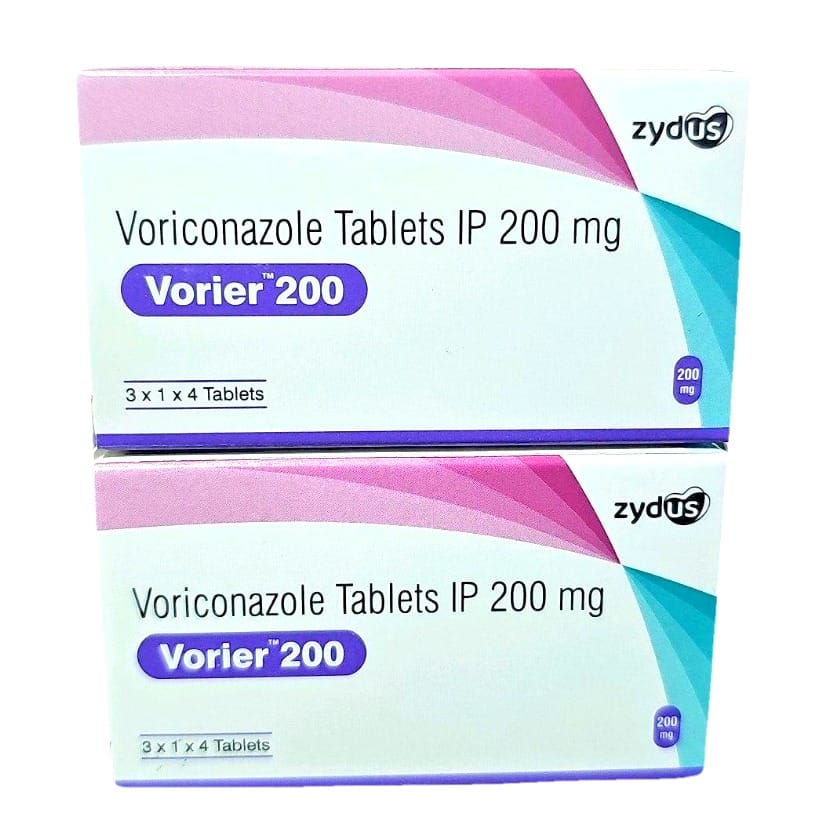




💊 Vorier 200mg Tablet contains voriconazole 200 mg, an oral prescription antifungal that a qualified healthcare professional may prescribe for selected serious fungal infections. Use it only for the person and condition specified by the prescriber. Dose and treatment duration are individual. Voriconazole can interact with many medicines and may require medical monitoring. Do not self-start, share, stop, or change the dose.
💊 What is Vorier 200mg Tablet?
Vorier 200 mg Tablet is an oral antifungal medicine listed as containing voriconazole. A qualified healthcare professional may prescribe voriconazole for selected serious fungal infections when the diagnosis and patient’s circumstances make this treatment appropriate.
The strength shown in the product name is the amount stated per tablet. It is not a personal dose or a schedule. The right dose and duration depend on the infection, age and health of the patient, other medicines, treatment response, and the prescriber’s plan.
This medicine is not intended for self-diagnosing or self-treating every rash, itch, nail change, or vaginal symptom. Similar symptoms can have different causes, and an antifungal intended for serious infections can cause harm if used without the right diagnosis and supervision.
Before taking any dose, check that the name, ingredient, strength, and tablet form on the pack match the prescription. If anything differs, ask the pharmacist or prescriber before using the medicine. Keep the patient leaflet with the pack so you can check the exact product instructions.
🧬 Vorier 200mg Tablet composition
The product is listed as containing voriconazole 200 mg per tablet. Confirm the ingredient and strength printed on the actual carton and leaflet supplied with the medicine. Do not infer the manufacturer, marketer, pack size, inactive ingredients, or batch details from a different seller’s page.
Inactive ingredients may differ between manufacturers and batches. A person with allergies, dietary restrictions, or a known sensitivity to an excipient should ask a pharmacist to check the exact pack information before taking the tablet.
🩺 What is Vorier 200mg Tablet used for?
Voriconazole may be prescribed for selected serious fungal infections. The exact approved uses vary by local product label, country, age group, and clinical situation. A clinician decides whether it is appropriate after considering the diagnosed or suspected infection, infection site, test results, severity, prior treatment, other medicines, and the patient’s overall health.
Some serious fungal infections require specialist assessment, diagnostic testing, or treatment in a hospital or other closely supervised setting. The medicine choice may depend on the fungus identified, how it responds to medicines, and whether the patient can safely take voriconazole.
Vorier should not be treated as a general medicine for every fungal symptom. A skin rash, nail change, mouth symptom, or genital symptom may have several possible causes. A clinician should determine the cause and the suitable treatment. Do not use tablets prescribed for another person or save leftover tablets for a future illness.
🔬 Why diagnosis and testing matter
Fungal infections are not all the same. Different organisms can affect different parts of the body and may need different medicines. A clinician may use examination, laboratory testing, imaging, or other information to decide whether voriconazole is suitable and whether the treatment is working.
Do not delay care for a serious or worsening illness while trying an online medicine. If you have already started treatment, keep follow-up appointments and tell your treating team about new symptoms, new medicines, or difficulty following the plan.
⚙️ How does voriconazole work?
Voriconazole belongs to the triazole group of antifungal medicines. It interferes with a fungal process involved in producing ergosterol, a component of fungal cell membranes. This can inhibit fungal growth when the medicine is appropriate for the particular infection.
The medicine is not an instant symptom reliever, and a product page cannot predict when an individual will feel better. Response can depend on the organism, infection site and severity, other care, medicine exposure, and the patient’s health. The treating clinician evaluates the response and decides whether the treatment should continue or change.
💊 Tablet form and other formulations
This listing is for an oral tablet. Voriconazole may be available in other forms in some settings, but a tablet, oral suspension, and injection are not automatically interchangeable. The dose, administration, and suitability can differ between formulations.
Do not substitute another form, brand, or strength yourself. If a pharmacist or clinician suggests a change, confirm the product, instructions, and dose before taking it. If the medicine delivered does not match the prescription, pause and ask a pharmacist or prescriber to check it.
📋 How to take Vorier 200mg Tablet
Take Vorier exactly as written on the prescription and explained by the prescriber or pharmacist. This page does not provide a personal dose. The prescriber determines the amount, timing, and duration according to the infection and the patient’s circumstances.
- 🔎 Check the product name, strength, and dosage form on the pack before use.
- 🕒 Follow the dose, schedule, and duration on your prescription. Do not calculate a dose from the 200 mg product name.
- 🍽️ Official voriconazole tablet labeling generally advises taking tablets at least one hour before or after a meal. Check the leaflet supplied with the exact Vorier pack and follow any specific directions from your prescriber.
- 💧 Take the tablet as directed in the leaflet. Do not crush, chew, or split it unless a pharmacist confirms that the exact tablet can be handled that way.
- 🚫 Do not take extra tablets because a dose was missed or symptoms have not improved.
- ✅ Do not stop early, extend the course, or change the timing without checking with the prescriber.
If you are unsure about how to take your medicine, ask the pharmacist to explain the directions using the exact pack and prescription. Do not rely on a schedule printed for another patient or another product.
🕒 Why the dose is individual
The correct regimen is determined by the treating clinician. It may depend on the type and site of infection, the patient’s age and body weight, the formulation, other medicines, liver function, treatment response, and local prescribing information. Some patients may need dose adjustments or closer monitoring.
A dose that was appropriate for one patient may be inappropriate for another. Never copy a friend’s, relative’s, or online reviewer’s schedule. Do not use an old prescription to treat a new infection without a clinician’s assessment.
⏰ What if you miss a dose?
Follow the missed-dose instructions in the supplied leaflet or ask your doctor or pharmacist. What to do can depend on the time of the missed dose and when the next one is due.
Do not take two doses together unless a healthcare professional specifically instructs you to do so. If you miss doses repeatedly, vomit after taking a dose, cannot keep the schedule, or are uncertain whether a dose was taken, contact the clinician or pharmacist for advice rather than guessing.
🚨 What if too much may have been taken?
If you or someone else may have taken more than prescribed, contact a healthcare professional or local poison-information service promptly. Seek emergency care for severe symptoms. Keep the product carton, blister, and prescription available so the care team can identify the medicine, strength, and possible amount taken.
Do not wait for symptoms to appear before seeking advice after a possible overdose. Do not make the person vomit unless a medical professional directs you to do so.
⚠️ Possible side effects
Not everyone experiences side effects, and a symptom can have more than one cause. Tell the healthcare professional managing your treatment about new, persistent, or troublesome symptoms. Do not change or stop the dose on your own unless a clinician tells you to.
Side effects reported with voriconazole can include changes in vision, headache, dizziness, nausea, vomiting, abdominal discomfort, diarrhoea, fever, rash, sensitivity to sunlight, or changes in liver blood tests. The possible effects and their frequency can depend on the patient, dose, duration, and treatment setting. This list is not complete. Read the leaflet supplied with the exact pack.
A mild symptom may still be worth discussing, especially if it persists or affects your ability to take the medicine. A severe or rapidly worsening reaction needs urgent medical attention.
👁️ Vision changes and alertness
Temporary changes in vision have been reported with voriconazole. Some people may notice blurred vision, altered colour perception, increased sensitivity to light, or other visual effects. The exact experience can differ between patients.
Until you know how the medicine affects you, use caution with driving, cycling, operating machinery, or other activities where a change in vision, dizziness, or alertness could cause harm. Ask your clinician what to do if visual symptoms continue, become severe, or affect daily activities.
🌞 Sun sensitivity and skin care
Voriconazole can make the skin more sensitive to sunlight or ultraviolet light. Ask your doctor or pharmacist how to protect your skin and follow the leaflet supplied with the medicine. Do not assume that ordinary sun exposure is harmless while taking a medicine that may cause photosensitivity.
Tell your healthcare professional about a severe sunburn-like reaction, a worsening rash, blistering, or unusual skin changes. This is especially important if treatment is prolonged. Your clinician can assess the reaction and advise whether the treatment plan needs review.
🧪 Liver safety and monitoring
Voriconazole can affect liver function. The prescriber may review your medical history, symptoms, and medicines and may arrange liver-function tests before or during treatment. The type and timing of monitoring depend on the patient and treatment plan.
Contact your care team promptly if you notice yellowing of the skin or eyes, unusually dark urine, persistent nausea, unusual severe tiredness, or other symptoms that concern you. These symptoms can have different causes, but they should be assessed, especially during treatment with a medicine that may affect the liver.
Do not change the dose or stop treatment on your own because of a test result or symptom. Ask the clinician who is managing the infection to interpret test results and give you next steps.
❤️ Heart rhythm and fainting precautions
Voriconazole may affect the heart’s electrical rhythm in some patients. Tell your clinician if you have a history of heart-rhythm problems, fainting, an abnormal heart test, or a condition that affects the heart. Share a full list of medicines, including any that may affect heart rhythm.
Your clinician may decide whether additional review or monitoring is appropriate. Seek urgent care for fainting, a severe or irregular heartbeat, chest symptoms, or sudden serious weakness. Do not start or stop heart medicines without medical advice.
🧠 Neurological symptoms and daily activities
Headache, dizziness, or other nervous-system effects may occur. If you feel dizzy, confused, unusually sleepy, or less alert, avoid driving and tasks that require full concentration until you have received medical advice and feel safe.
Tell your clinician about severe, persistent, or unusual symptoms. Seek urgent care for seizure, loss of consciousness, or a sudden severe reaction. Do not assume that a new symptom is caused by Vorier or ignore it; a healthcare professional can assess possible causes.
💊 Important medicine interactions
Voriconazole can interact with many prescription medicines, over-the-counter products, vitamins, supplements, and herbal products. Some combinations may be unsuitable, while others may require a treatment change, dose adjustment, or closer monitoring. The exact interaction list depends on the local product information and the patient’s complete medication list.
Before starting Vorier, tell the prescriber or pharmacist about everything you use, including:
- Other antifungal or antiviral medicines
- Antibiotics and tuberculosis medicines
- Epilepsy or seizure medicines
- Medicines for heart rhythm, blood pressure, or cholesterol
- Transplant medicines and blood thinners
- Pain medicines and medicines that cause sleepiness
- Vitamins, mineral supplements, herbal products, and recreational substances
This is an illustrative list, not a complete interaction checker. Do not start, stop, or change another medicine to make room for voriconazole. If another clinician prescribes a new medicine while you are taking Vorier, tell them before you start it.
🍷 Alcohol and Vorier
Ask your doctor or pharmacist whether alcohol is appropriate for you while taking Vorier. This is especially important if you have liver problems, use other medicines, or feel dizzy, sleepy, or less alert. Do not drive or operate machinery if you feel affected.
This page does not establish a universal alcohol rule for every patient. Follow the advice from the clinician who knows your diagnosis and full medication list.
🤰 Pregnancy, contraception, and breastfeeding
Tell your prescriber before taking Vorier if you are pregnant, may be pregnant, planning pregnancy, or breastfeeding. The clinician needs to assess your individual situation and explain the appropriate plan. Do not make a decision about starting or stopping treatment based only on a product page.
If you become pregnant during treatment or have concerns about contraception, contact your prescriber promptly. Do not stop a medicine for a serious infection without advice, but do not ignore pregnancy concerns either. A healthcare professional can discuss the risks, benefits, and possible alternatives for your circumstances.
👶 Children and older adults
Whether voriconazole is appropriate and how it is prescribed can depend on age, body weight, diagnosis, formulation, other medicines, and local product labeling. Do not give an adult product or schedule to a child unless the child’s clinician has specifically prescribed it.
Older adults may have other health conditions or use several medicines. The clinician and pharmacist should review those factors when treatment is planned. A caregiver can help maintain the schedule and attend appointments, but should not change the dose without the prescriber.
🚫 Who should check with a doctor before taking Vorier?
Before treatment, tell your clinician about any allergy to voriconazole or product ingredients; liver or kidney disease; heart-rhythm problems; fainting or abnormal heart tests; a serious previous reaction to sunlight; pregnancy or breastfeeding; and every medicine or supplement you use.
A clinician or pharmacist should review your history and the exact product leaflet. If you have previously had a serious reaction to an antifungal medicine, explain what happened and which product was involved before taking another dose.
🧑⚕️ Monitoring and follow-up
Follow-up helps the treating clinician assess whether the infection is responding and whether side effects or interactions are developing. Depending on the patient, the clinician may arrange blood tests, review liver function, assess heart-rhythm risks, check other laboratory results, review medicine levels, or change the treatment plan.
Keep the appointments and tests recommended for you. Contact the care team if you miss an appointment, start another medicine, cannot take Vorier as prescribed, or develop new symptoms. Do not interpret laboratory results or make treatment changes without a healthcare professional.
🔄 Why not stop or change treatment on your own?
The infection may require a specific treatment plan and follow-up. Stopping, changing, or taking the medicine inconsistently without medical advice may affect treatment and could allow the infection to worsen or return. The clinician should decide whether a side effect, test result, or change in symptoms means that treatment should continue or change.
If you cannot obtain the medicine, cannot swallow the tablet, have repeated vomiting, or are worried about side effects, contact the prescriber or pharmacist promptly. Do not compensate by taking extra tablets later.
🧾 Why is Vorier a prescription medicine?
Voriconazole can have important interactions and side effects, and the appropriate treatment depends on diagnosis and patient-specific factors. A qualified healthcare professional must decide whether the medicine is suitable, provide the dose and duration, and determine whether monitoring is needed.
Follow the prescription and the applicable local requirements when obtaining the medicine. A product listing cannot confirm a person’s diagnosis, replace a prescription review, or guarantee that Vorier is suitable for everyone with similar symptoms.
🛒 What to check before ordering Vorier online
- Match the product name, ingredient, strength, and dosage form with the prescription.
- Check the pack size and manufacturer or marketer shown for the exact product.
- Follow the prescription verification steps required by the seller and local rules.
- When the order arrives, check the label, seal, batch information, and expiry date.
- Do not use a pack that appears opened, damaged, wet, or tampered with.
- If the delivered item differs from the prescription, ask a pharmacist or prescriber before using it.
Price, stock, delivery terms, batch details, and expiry information can change. Use current store and product data for those details; do not rely on old screenshots or evergreen description text.
🔁 Vorier 200mg Tablet alternatives
A medicine with the same or a similar ingredient is not automatically a suitable substitute. Product strength, formulation, inactive ingredients, diagnosis, interacting medicines, and patient-specific factors may differ.
Only a doctor or pharmacist should approve a substitute or change. Do not switch brands or formulations based only on a similar name, tablet appearance, online price comparison, or a recommendation intended for another person.
📦 Storage and disposal
Store the medicine as stated on the supplied package and leaflet. Keep it in its labelled pack, away from children and pets. Follow the pack’s directions about heat, moisture, and light. Do not use tablets that are expired, damaged, discoloured, wet, or unsealed without checking with a pharmacist.
Ask a pharmacist about safe disposal of unused medicine. Do not share leftover tablets or keep them for a future illness. Product packaging and storage instructions can vary, so follow the leaflet for the exact Vorier pack you have.
🌿 Lifestyle and practical support during treatment
Use the medicine as part of the care plan provided by your clinician. Keep a written list of medicines and supplements, note any new symptoms, and bring the list to appointments. A caregiver can help the patient remember the schedule and follow-up, but should not change the regimen.
If appetite, nausea, swallowing difficulty, or another issue makes it hard to take the medicine, tell the care team. A pharmacist may be able to clarify administration instructions or explain whether another formulation is appropriate, but any switch must be arranged by the clinician.
❓ Frequently asked questions about Vorier 200mg Tablet
1. What is Vorier 200 mg Tablet?
Vorier 200 mg Tablet is an oral product listed as containing voriconazole 200 mg. Voriconazole is an antifungal medicine that may be prescribed for selected serious fungal infections. Use the exact product only for the person and condition named on the prescription, and confirm the pack details with the supplied carton and leaflet.
2. What is the active ingredient in Vorier?
The product is listed as containing voriconazole. Check the actual carton and patient leaflet to confirm the ingredient, strength, and dosage form. If the label differs from your prescription or order, do not guess which product to take; ask the pharmacist or prescriber to verify it first.
3. What does 200 mg mean?
The 200 mg describes the stated strength per tablet. It does not tell you how many tablets to take, how often to take them, or how long treatment should last. Follow the individualized directions written on your prescription and ask your pharmacist if any part is unclear.
4. Is Vorier an antibiotic?
No. Voriconazole is an antifungal medicine. It does not treat bacterial or viral infections. Symptoms can overlap between different illnesses, so a clinician should determine the cause before treatment. Do not take an antifungal for a suspected infection just because similar symptoms improved with a medicine in the past.
5. What infections may a clinician treat with voriconazole?
A clinician may prescribe it for selected serious fungal infections. The exact approved indications vary by local label and clinical situation. The treating professional considers the diagnosis, likely or confirmed organism, infection site, test results, other medicines, and patient history. This page cannot determine whether voriconazole is right for a particular person.
6. Can I use Vorier for a common skin infection?
Do not use it for a self-diagnosed skin condition. Many rashes and itchy areas have causes other than the organisms for which voriconazole may be prescribed. A clinician should examine the problem and recommend an appropriate treatment. Taking a prescription antifungal unnecessarily can expose you to side effects and interactions.
7. Can I use it for a nail infection?
Do not start Vorier for a nail change without medical advice. Nail changes can have causes other than fungus, and different fungal infections may need different treatment. A healthcare professional can decide whether testing, another treatment, or no antifungal is appropriate for your situation.
8. Can I use Vorier for vaginal itching or discharge?
Do not use this medicine to self-treat vaginal symptoms. Itching or discharge may be caused by several conditions, and the right treatment depends on the cause. Contact a qualified healthcare professional for evaluation, especially if symptoms are new, severe, recurring, or accompanied by pain or fever.
9. Does Vorier work for every type of fungus?
No antifungal medicine should be assumed to treat every fungal species or infection site. Whether voriconazole is appropriate depends on the organism, its susceptibility, the infection, and patient factors. A clinician may use test results and treatment response to guide therapy. Do not assume that one antifungal can replace another.
10. How does voriconazole work?
Voriconazole interferes with a fungal process involved in making ergosterol, a component of fungal cell membranes. This can inhibit fungal growth when the medicine suits the infection. It is not an instant symptom reliever, and the mechanism does not mean it will work for every infection or every patient.
11. How quickly will I feel better?
There is no single response time that applies to everyone. Improvement depends on the infection, its severity and location, the organism, other care, and the patient’s health. Keep follow-up appointments and contact the treating clinician if symptoms worsen or you are concerned about progress.
12. Is Vorier 200mg a tablet or an injection?
This listing is for an oral tablet. Other voriconazole dosage forms may exist, but they are not automatically interchangeable. Check the actual pack and prescription. If your prescribed formulation differs from the product delivered, ask a pharmacist or prescriber before taking it.
13. Can I substitute the tablet for an injection?
Do not substitute one formulation for another yourself. The route, dose, and administration can differ. A clinician must decide whether a change is suitable and provide the correct directions. Contact the treating team if you cannot take the formulation that was prescribed.
14. What dose of Vorier should I take?
Take only the dose and schedule written on your prescription. The product name and strength do not determine an individual regimen. The prescriber considers the infection, patient characteristics, other medicines, liver function, response, and product labeling. If the directions are missing or unclear, contact the prescriber or pharmacist.
15. Can I take one tablet because the product says 200 mg?
Do not infer a dose from the product name. A 200 mg tablet strength is not an instruction to take one tablet or a certain number of tablets each day. Follow the prescription exactly. Ask a pharmacist to clarify any difference between the prescription label and the carton.
16. Should I take Vorier with food?
Official voriconazole tablet labeling generally advises taking tablets at least one hour before or after a meal. Check the leaflet supplied with the exact Vorier product and follow any specific instructions from your prescriber. If food timing is difficult, ask your pharmacist rather than changing the schedule.
17. Should I take it at the same time every day?
Follow the timing specified on your prescription. Keeping to a consistent schedule may help some patients remember doses, but the exact interval must come from the prescriber. Do not change the times to fit meals, sleep, or another medicine without asking a pharmacist or clinician.
18. Can I crush or split the tablet?
Do not crush, chew, or split the tablet unless a pharmacist confirms that the exact product can be handled that way. Tablets may differ by manufacturer and formulation. If swallowing is difficult, tell the prescriber; they can consider a safe option rather than having you alter the tablet yourself.
19. Can I take Vorier with water?
Use the administration instructions in the product leaflet and prescription. If the leaflet permits swallowing with water, follow those directions. Do not add other drinks or mix the medicine with food unless the exact product instructions or a pharmacist confirm it is suitable.
20. What if I miss a dose?
Check the missed-dose instructions in your leaflet or contact your pharmacist or prescriber. The right action may depend on the timing of the missed dose and the next scheduled dose. Do not double the next dose or take extra tablets to compensate unless a clinician specifically directs you.
21. What if I vomit after taking a dose?
Do not automatically repeat the dose. Whether medicine was absorbed can depend on timing and circumstances. Contact your pharmacist or prescriber for advice, and share when you took the tablet and when vomiting occurred. Seek urgent help if vomiting is severe or you feel seriously unwell.
22. What if I accidentally take too much?
Contact a healthcare professional or local poison-information service promptly. Seek emergency care if severe symptoms occur. Keep the carton and prescription available and tell the care team how many tablets may have been taken and when. Do not wait for symptoms or try to induce vomiting unless a medical professional directs you.
23. How long should I take Vorier?
The treating clinician decides the duration based on the infection and response. There is no universal course length for every patient. Continue follow-up and complete treatment as prescribed, but contact the clinician if side effects, supply problems, or questions make it difficult to continue.
24. Can I stop as soon as I feel better?
Do not stop based only on symptom improvement. The infection may need ongoing treatment or reassessment. Contact the prescriber before changing or stopping the medicine. If you have a severe reaction or emergency symptoms, seek urgent care immediately and tell the care team what you took.
25. Can I take extra tablets if my symptoms are severe?
No. Do not take more than prescribed, even if symptoms feel severe or have not improved. Extra doses can increase the risk of harm and may not treat the cause. Contact the clinician managing the infection if symptoms worsen or treatment does not seem to be helping.
26. What side effects can Vorier cause?
Possible effects reported with voriconazole include changes in vision, headache, dizziness, nausea, vomiting, abdominal discomfort, diarrhoea, fever, rash, sun sensitivity, or changes in liver blood tests. This is not a complete list. Read the leaflet and contact a healthcare professional about symptoms that are severe or persistent.
27. Does Vorier affect vision?
Vision changes have been reported with voriconazole. They may be temporary, but a healthcare professional should assess severe, persistent, or troubling effects. Use caution with driving and machinery until you know how the medicine affects you. Seek urgent help if a sudden visual change is severe or accompanied by other serious symptoms.
28. Can I drive after taking Vorier?
Use caution until you know whether the medicine affects your vision, balance, or alertness. Do not drive, cycle in traffic, or operate machinery if you feel dizzy, sleepy, confused, or have altered vision. Ask your healthcare professional for advice if symptoms interfere with normal activities.
29. Can Vorier make me dizzy or sleepy?
Dizziness or other effects that reduce alertness may occur. Avoid hazardous activities if you feel affected, and tell your clinician if the symptom persists or is severe. Other medicines or the infection itself may also contribute, so a professional should assess your full situation.
30. Can Vorier cause nausea or stomach discomfort?
Gastrointestinal symptoms such as nausea, vomiting, or abdominal discomfort have been reported. Contact your healthcare professional if they are severe, persistent, or make it difficult to take the medicine. Do not repeat a dose after vomiting unless your prescriber or pharmacist tells you what to do.
31. Can Vorier cause diarrhoea?
Diarrhoea has been reported with voriconazole, but it can also have other causes. Tell your clinician if it is severe, persistent, or accompanied by dehydration, blood, fever, or worsening illness. Seek urgent care for severe symptoms rather than changing the antifungal dose yourself.
32. Can Vorier cause a rash?
A rash may occur, and some skin reactions can be serious. Tell your healthcare professional about a new or worsening rash. Seek urgent medical help for blistering, peeling, swelling, breathing difficulty, or a rapidly spreading reaction. Do not wait for an online reply if the reaction is severe.
33. Does Vorier increase sun sensitivity?
Voriconazole can increase sensitivity to sunlight or ultraviolet light. Ask your clinician or pharmacist about appropriate skin protection and follow the exact leaflet. Tell them about severe sunburn-like reactions, blistering, or unusual skin changes, particularly if treatment is prolonged.
34. Can Vorier affect the liver?
Voriconazole can affect liver function, and clinicians may arrange blood tests or other monitoring. Contact your care team if you notice yellowing of the skin or eyes, unusually dark urine, persistent nausea, or unusual severe tiredness. A clinician should interpret symptoms and test results; do not change your dose yourself.
35. What are warning signs of liver problems?
Possible warning signs can include yellow skin or eyes, unusually dark urine, persistent nausea, or unusual severe tiredness, but symptoms vary and can have other causes. Contact your clinician promptly if these occur. Seek urgent care for severe or rapidly worsening illness.
36. Can Vorier affect the heart rhythm?
Voriconazole may affect the heart’s electrical rhythm in some patients. Tell your clinician about heart-rhythm conditions, fainting, abnormal heart tests, and other medicines. Seek urgent care for fainting, a severe or irregular heartbeat, or sudden serious symptoms. Do not stop heart medicines without medical advice.
37. Will I need blood tests?
Your clinician may recommend tests depending on the infection, treatment duration, medical history, other medicines, and response. Tests may help monitor liver function or other aspects of treatment. Keep appointments and ask the prescriber what each test is for and when you should expect follow-up.
38. Why might the doctor check liver tests?
Voriconazole can affect liver function, so the clinician may check liver-related blood tests before or during treatment. The need and schedule depend on your circumstances and local product information. Do not interpret results or make dose changes without the healthcare professional responsible for your care.
39. Do I need an ECG or heart test?
Not every patient needs the same monitoring. A clinician may review heart-rhythm risk or arrange tests based on medical history, other medicines, symptoms, and local product guidance. Tell your prescriber about fainting, known rhythm problems, or medicines that affect the heart.
40. Can I take Vorier if I have liver disease?
Tell the prescriber before treatment if you have liver disease or abnormal liver tests. The clinician must assess whether voriconazole is appropriate, what dose or monitoring is needed, and whether another option should be considered. Do not use a schedule prescribed to someone with different medical circumstances.
41. Can I take Vorier if I have kidney problems?
Tell your prescriber about kidney disease, dialysis, or abnormal kidney tests. The clinician will consider the exact product, treatment plan, other health factors, and local product information. Do not adjust the dose yourself or assume that kidney disease is irrelevant because the medicine is taken by mouth.
42. Is Vorier safe during pregnancy?
Ask your prescriber before use if you are pregnant, may be pregnant, or planning pregnancy. The clinician must assess individual risks and benefits and explain the treatment plan. Do not start or stop treatment based only on a product page, especially when the infection may be serious.
43. Can I take Vorier while breastfeeding?
Discuss breastfeeding with your prescriber before taking voriconazole. The clinician can consider the medicine, the infection, infant factors, and available options. Do not make a change to feeding or medicine based only on online information; ask for advice specific to your situation.
44. What if I become pregnant during treatment?
Contact the prescriber promptly and explain when treatment started and your current situation. Do not make an independent decision to stop or continue. A clinician can assess the infection and pregnancy-related considerations and advise on a safe plan.
45. Can children take Vorier 200mg tablets?
A child’s treatment must be prescribed by a clinician with appropriate pediatric expertise. The correct medicine and regimen can depend on age, body weight, diagnosis, formulation, and local labeling. Do not give a child an adult product or schedule unless it was specifically prescribed for that child.
46. Can older adults take Vorier?
A clinician should assess the older adult’s diagnosis, other health conditions, medicines, and ability to follow the treatment plan. Older people may use several medicines, increasing the importance of a complete interaction review. Do not use another person’s prescription or change a prescribed regimen.
47. Can I take Vorier with my regular medicines?
Do not assume it is safe. Voriconazole can interact with many medicines, and some combinations may need specialist review or monitoring. Give your doctor or pharmacist a complete list, including medicines from other clinicians, over-the-counter products, supplements, and herbal remedies.
48. Do vitamins or herbal supplements interact with Vorier?
Some supplements and herbal products can affect medicines or add to side effects. Tell your clinician and pharmacist about everything you take, even products described as natural. Do not start a new supplement or stop a prescribed treatment without checking whether it is suitable with voriconazole.
49. Can I take antibiotics with Vorier?
Some antibiotics may interact with voriconazole, while others may be used together under medical supervision. The exact medicine, dose, and patient history matter. Tell the prescriber about every antibiotic you use and do not start leftover antibiotics without professional advice.
50. Can I take seizure medicines with Vorier?
Some seizure medicines can interact with voriconazole or affect treatment. Do not stop an anticonvulsant on your own. Tell both the prescriber and pharmacist exactly which medicine and dose you take so they can check whether a monitored treatment plan or another option is needed.
51. Can I take HIV medicines with Vorier?
Some antiviral and HIV medicines may interact with voriconazole. The exact combination needs professional review. Tell the clinician managing your infection about every antiviral medicine and ask the pharmacist to check the full regimen before starting or changing any treatment.
52. Can I take TB medicines with Vorier?
Some medicines used for tuberculosis may have important interactions with voriconazole. Do not start, stop, or change TB treatment on your own. Make sure the clinicians managing both conditions know about all medicines so they can coordinate a suitable plan.
53. Can I take blood thinners with Vorier?
Some blood-thinning medicines may interact with voriconazole or require closer monitoring. Tell the prescriber and pharmacist if you take an anticoagulant or antiplatelet medicine. Do not change or skip a blood thinner without the clinician responsible for it.
54. Can I take cholesterol medicines with Vorier?
Some cholesterol-lowering medicines can have interactions with voriconazole. Give your prescriber and pharmacist the exact medicine names and doses. Do not stop a cholesterol medicine or substitute another one without a professional review of the combination.
55. Can I take pain or sleep medicines with Vorier?
Some pain medicines and medicines that cause sleepiness may interact or add to reduced alertness. Tell your clinician about prescription and non-prescription products, including occasional use. Avoid driving if you feel dizzy or sleepy, and ask before adding a new medicine.
56. Can I drink alcohol while taking Vorier?
Ask your doctor or pharmacist whether alcohol is appropriate for you. The answer may depend on liver health, other medicines, the infection, and whether you feel dizzy or less alert. Do not drive or operate machinery if you feel affected by alcohol or medicine.
57. Can I take an antacid or stomach medicine with Vorier?
Do not assume a stomach medicine is compatible. Products can differ, and interaction advice depends on the exact ingredient and your treatment. Show the package or provide the exact name to a pharmacist or prescriber before taking it with Vorier.
58. What if a new doctor prescribes another medicine?
Tell the new prescriber that you are taking voriconazole and provide your full medicine list. Voriconazole may interact with many products. If possible, ask the pharmacist to check the combination before starting the new medicine, especially if it is being prescribed urgently or by another clinic.
59. Can I take Vorier with herbal products?
Check first with your doctor or pharmacist. Herbal products can affect medicines and are not automatically safe because they are sold without a prescription. Share the product name and ingredients, and do not start it during treatment until a professional has reviewed the combination.
60. Can I use another brand with the same ingredient?
Do not switch brands on your own. The strength, formulation, ingredients, and product instructions may differ. Ask a pharmacist or prescriber to confirm whether a specific product is an appropriate substitute and whether the directions remain the same.
61. Is a generic product automatically identical to Vorier?
A product with the same active ingredient may still differ in manufacturer, pack, inactive ingredients, or labeling. A pharmacist or prescriber can confirm whether a particular product is an approved, suitable substitute for your prescription. Do not rely only on a similar name or appearance.
62. Can I share Vorier with a family member who has similar symptoms?
No. The medicine is prescribed for a particular person and condition. Similar symptoms may have different causes, and the other person may have interactions, allergies, or health risks. They should receive their own diagnosis and treatment advice from a qualified professional.
63. Can I use leftover Vorier later?
Do not use leftover prescription medicine for a new illness without a clinician’s assessment. The new symptoms may have a different cause, the medicine may be expired, and the previous schedule may not fit your current health or other medicines. Ask a healthcare professional what to do with unused tablets.
64. How should I store Vorier?
Follow the storage directions on the exact carton and patient leaflet. Keep it in its labelled pack, out of reach of children and pets, and away from conditions the leaflet identifies as harmful. If the package is damaged or the storage instructions are unclear, ask a pharmacist.
65. Can I use Vorier after the expiry date?
Do not use medicine after the expiry date printed on the pack unless a pharmacist or relevant healthcare professional provides specific advice. Expired medicine may not meet the expected quality standards. Ask a pharmacist how to dispose of unused tablets safely.
66. What should I check when the medicine is delivered?
Check the product name, strength, dosage form, seal, packaging condition, batch details, and expiry date. Compare it with the prescription and order. Do not use a pack that appears opened, damaged, wet, or inconsistent with the prescription; ask a pharmacist or seller to clarify the discrepancy.
67. How can I confirm the pack size and manufacturer?
Check the exact carton, blister, and official leaflet or current seller product record. Pack size and manufacturer/marketer should not be copied from another shop because products and batches may differ. If details are unclear, ask the pharmacist to verify the pack before use.
68. What if the delivered product looks different from the image?
Packaging can change, but a difference should be checked before use. Compare the product name, active ingredient, strength, dosage form, batch, and expiry with your prescription and order. Contact a pharmacist or the seller to verify that the delivered product is the correct one.
69. What should I do if a tablet looks damaged?
Do not take a tablet that is cracked, wet, discoloured, crumbling, or otherwise damaged until a pharmacist checks it. Keep the package and show the pharmacist the tablet. Do not replace it with an extra dose unless the prescriber or pharmacist tells you what to do.
70. What if Vorier is unavailable at the pharmacy?
Contact your prescriber or pharmacist promptly, especially if you are in the middle of treatment. Do not switch to another strength, brand, or antifungal without approval. The clinician can advise whether an alternative product or supply plan is suitable for your circumstances.
71. Can I order Vorier without a prescription?
Follow the applicable local rules and the seller’s verified process. Voriconazole should be used under qualified medical supervision. A website listing does not determine whether the medicine is appropriate for you or replace a prescription review.
72. Is online ordering a substitute for a doctor visit?
No. Ordering a product does not confirm the diagnosis or provide individualized treatment advice. Voriconazole can interact with medicines and may require monitoring. Speak with a qualified clinician about the infection, prescription, and follow-up plan.
73. Does this product page guarantee a cure?
No product page can guarantee that a medicine will cure an infection. Response depends on the organism, infection site and severity, medicine susceptibility, treatment plan, and patient factors. The treating clinician monitors progress and decides whether treatment is working.
74. Does Vorier work immediately?
Voriconazole is not an instant-relief medicine. A clinician evaluates the response over time using symptoms, examination, test results, and the overall clinical picture. Contact the treating team if symptoms rapidly worsen or you are concerned about progress.
75. What if I feel no improvement?
Do not increase the dose or stop treatment yourself. Contact the clinician managing your infection and explain how long you have been taking the medicine, whether doses were missed, and any new symptoms. The clinician can decide whether testing or a treatment change is needed.
76. What if my symptoms get worse during treatment?
Contact your treating clinician promptly. Seek urgent care if the illness is severe, rapidly worsening, or accompanied by emergency symptoms such as difficulty breathing, fainting, seizure, severe heartbeat changes, or a severe blistering rash. Do not wait for an online response in an emergency.
77. How do I know whether treatment is working?
Only the treating clinician can assess the response using your symptoms, examination, test results, and other relevant information. Some infections need ongoing monitoring even when symptoms improve. Keep follow-up appointments and tell the clinician about changes or new problems.
78. Why does my doctor want follow-up appointments?
Follow-up can help assess whether the infection is responding, whether side effects are developing, and whether the treatment remains suitable. The clinician may review medicines, symptoms, lab tests, or other information. Keep appointments or reschedule promptly if you cannot attend.
79. Why might the clinician check medicine levels?
For some patients or treatment situations, a clinician may consider measuring medicine levels to guide the plan. Whether this is appropriate depends on the infection, response, other medicines, and clinical judgment. Do not arrange or interpret such testing without the treating team.
80. Can my caregiver help manage the treatment?
Yes. A caregiver can help keep the prescription, medicine list, appointment schedule, and questions organized. They can remind the patient about the prescribed schedule if the patient wants help. The caregiver should not change the dose or share the medicine with anyone else.
81. What information should I bring to my appointment?
Bring the medicine pack, prescription, complete list of medicines and supplements, allergy information, and notes about symptoms or side effects. Mention missed doses, changes in other medicines, and any new health conditions. This helps the clinician assess the treatment accurately.
82. Should I tell the doctor about an allergy to another antifungal?
Yes. Tell the clinician which medicine caused the reaction, what symptoms occurred, and when it happened. A reaction to one medicine does not automatically determine whether another is suitable, but the prescriber needs the details to assess risk and choose safely.
83. What should I do if I develop a rash in the sun?
Move out of direct sun and contact your healthcare professional for advice, particularly if the rash is severe, blistering, painful, or spreading. Seek urgent help for breathing difficulty, facial swelling, peeling skin, or rapid worsening. Do not decide on your own whether to continue treatment.
84. Can Vorier affect sleep or mood?
If you notice a new change in sleep, mood, thinking, or alertness, tell your clinician. Such symptoms can have several causes, including illness or other medicines. Seek urgent care for severe confusion, unusual behavior, loss of consciousness, or another rapidly worsening symptom.
85. Can I take Vorier if I have a heart condition?
Tell your prescriber about the exact heart condition, previous rhythm tests, fainting, and all heart medicines. The clinician must assess whether voriconazole is appropriate and whether monitoring is needed. Do not start, stop, or change heart medicines without the clinician responsible for them.
86. Can I take Vorier if I have a history of fainting?
Tell your clinician before treatment. Fainting can have many causes, and the prescriber may need to review your history, heart rhythm, and medicines. Seek urgent care for a new fainting episode, especially if accompanied by a severe or irregular heartbeat or chest symptoms.
87. What if I have difficulty swallowing the tablet?
Do not crush or split it on your own. Contact your pharmacist or prescriber and explain the problem. They can check whether the exact product may be altered or whether another prescribed formulation is suitable. Do not substitute a different product or dose without their advice.
88. Can I take the medicine if I am fasting?
Food timing instructions for voriconazole tablets can be specific. Follow the exact leaflet and prescription rather than changing timing to fit a fast. If fasting affects your schedule or ability to take the medicine, discuss the plan with the prescriber or pharmacist in advance.
89. What if I accidentally take the dose with food?
Do not repeat the dose or take extra medicine unless a clinician instructs you. Check the product leaflet and contact your pharmacist or prescriber if you are unsure what to do. Tell them when you took the dose and what you ate if that information is relevant.
90. Can I take Vorier at bedtime?
Follow the prescription schedule and food instructions. Bedtime may not fit the required timing for every person or dose. Ask your pharmacist or prescriber before changing the time, especially if you take several doses or other medicines.
91. Can I take Vorier with milk or juice?
Follow the instructions on the supplied leaflet. Do not assume that milk, juice, or another drink can be substituted for water or used to mix the tablet. If you have difficulty swallowing or need a different method, ask a pharmacist to check the exact product.
92. Should I avoid sunlight completely?
Do not make a major lifestyle change based only on this page. Voriconazole can increase sun sensitivity, so ask your healthcare professional about practical protection for your treatment period. Follow the leaflet and report severe sunburn-like reactions, blistering, or unusual skin changes.
93. What should I do if I miss several doses?
Contact the clinician managing your infection or your pharmacist. Do not restart with extra doses or change the schedule yourself. Explain how many doses were missed, when the last dose was taken, and whether anything made it difficult to follow the prescription.
94. Can I restart Vorier after stopping it for a few days?
Do not restart without medical advice. The reason for stopping, current symptoms, treatment history, and other medicines matter. Contact the prescriber promptly so they can decide whether to resume, change, or reassess the treatment.
95. What if I have side effects but the infection is serious?
Contact the clinician managing the infection as soon as possible and describe the symptoms, timing, and severity. Do not independently stop or continue through a severe reaction. Seek urgent medical care for emergency symptoms such as breathing difficulty, fainting, seizure, or a severe blistering rash.
96. Can I take a second antifungal with Vorier?
Do not combine antifungal medicines unless a clinician has prescribed the combination. The medicines may interact or cause overlapping side effects, and the combination may not be appropriate for your infection. Share all current and recently used antifungals with your prescriber and pharmacist.
97. Does Vorier prevent fungal infections?
Do not use Vorier for prevention unless a qualified healthcare professional specifically prescribed it for that purpose. The decision depends on the patient’s medical situation and local product information. Do not take leftover tablets to prevent an infection without medical advice.
98. Can I use Vorier for a cold, flu, or COVID-like illness?
Voriconazole is an antifungal medicine and does not treat ordinary viral illnesses such as colds or flu. Symptoms may overlap with other conditions, so seek appropriate medical advice if you are unwell. Do not take the medicine unless it was prescribed for your diagnosed condition.
99. Can I buy Vorier for someone who cannot visit a doctor?
The person needs appropriate medical assessment and a valid treatment plan. Do not obtain prescription medicine for someone else based on your own symptoms or advice from the internet. If the person is very unwell or cannot access routine care, seek appropriate urgent medical assistance.
100. How can I tell whether the product is authentic?
Check the packaging, seal, batch information, expiry date, and details from the seller, and ask a pharmacist to verify concerns. This page cannot authenticate an individual pack or batch. Do not use a pack that appears tampered with or does not match the prescription.
101. How should I dispose of unused Vorier?
Ask a pharmacist about local medicine-disposal options. Do not share leftover tablets, keep them for a future illness, or dispose of them where children or pets could reach them. Keep the medicine in its pack while arranging safe disposal.
102. Does pack size change the prescribed dose?
No. Pack size is a packaging detail, not an instruction for how much to take. Follow the prescription for dose and duration. Verify the exact pack count from the current product record and carton, since different sellers or batches may present different packaging.
103. What should I do if the prescription and product label differ?
Pause before taking the medicine and ask the pharmacist or prescriber to verify the discrepancy. Do not choose one instruction based on guesswork. Have the prescription and product pack available so the professional can compare the name, strength, dosage form, and directions.
104. Can I use this page as medical advice?
No. This page offers general educational information and cannot diagnose an infection or provide a personal treatment plan. Use the instructions from your prescriber and the leaflet supplied with the medicine. Ask a qualified healthcare professional about your own diagnosis, dose, risks, and follow-up.
105. What is the most important safety point?
Use Vorier only when prescribed for you, follow the exact directions, and tell your clinician about all medicines, supplements, and relevant health conditions. Voriconazole can have significant interactions and may require monitoring. Seek urgent care for a severe reaction or emergency symptom.
👨⚕️ When to speak with a healthcare professional
Ask your doctor or pharmacist about the dose, food instructions, missed doses, side effects, interactions, pregnancy, other health conditions, or treatment duration. Share your complete medicine and supplement list and tell them about new symptoms or changes in your health.
For a severe reaction, rapidly worsening illness, or emergency symptom, seek urgent medical care rather than waiting for an online response.
📌 Important points to remember
- Vorier 200mg Tablet is listed as containing voriconazole 200 mg; confirm the exact pack.
- The 200 mg strength is not a personal dosing instruction.
- Use the medicine only for the person and condition specified by a qualified prescriber.
- Do not self-treat ordinary fungal symptoms with this prescription medicine.
- Follow the supplied leaflet and prescriber’s instructions about food and timing.
- Tell your healthcare professional about all medicines, supplements, allergies, and health conditions.
- Keep follow-up and monitoring appointments.
- Do not stop, restart, share, or change the medicine without medical advice.
- Verify pack size, manufacturer/marketer, price, stock, batch, and expiry from current store and pack information.
📚 Medical information and references
This content is for general educational purposes and does not replace diagnosis, prescription, or personal medical advice. Safety wording should be reviewed against the actual Vorier patient leaflet and locally applicable product information before publishing. Reference sources reviewed for the ingredient include official voriconazole labeling from DailyMed and FDA-hosted prescribing information, plus European Medicines Agency product information for voriconazole products. Those references do not verify the manufacturer, pack size, or exact local labeling of the Vorier item sold on this page.
References:
- Pfizer, Electronic Medicines Compendium (EMC), [Revised on Jul 2021] [Accessed on 02nd June 2023], https://www.medicines.org.uk/emc/files/pil.7976.pdf
- D.H. Dockrell, S. Sundar, B.J. Angus, R.P. Hobson, Infectious disease, Davidson’s Principles and Practice of Medicine, 22nd Edition, 2014, 293-386.
- Dr. Reddy’s Laboratories (UK) Ltd., Electronic Medicines Compendium (EMC), [Revised on July 2022] [Accessed on 02nd June 2023] PACKAGE LEAFLET: INFORMATION FOR THE USER (medicines.org.uk)
Medical disclaimer: Do not start, stop, change the dose of, or replace Vorier 200mg Tablet without consulting a qualified healthcare professional.














There are no reviews yet.