


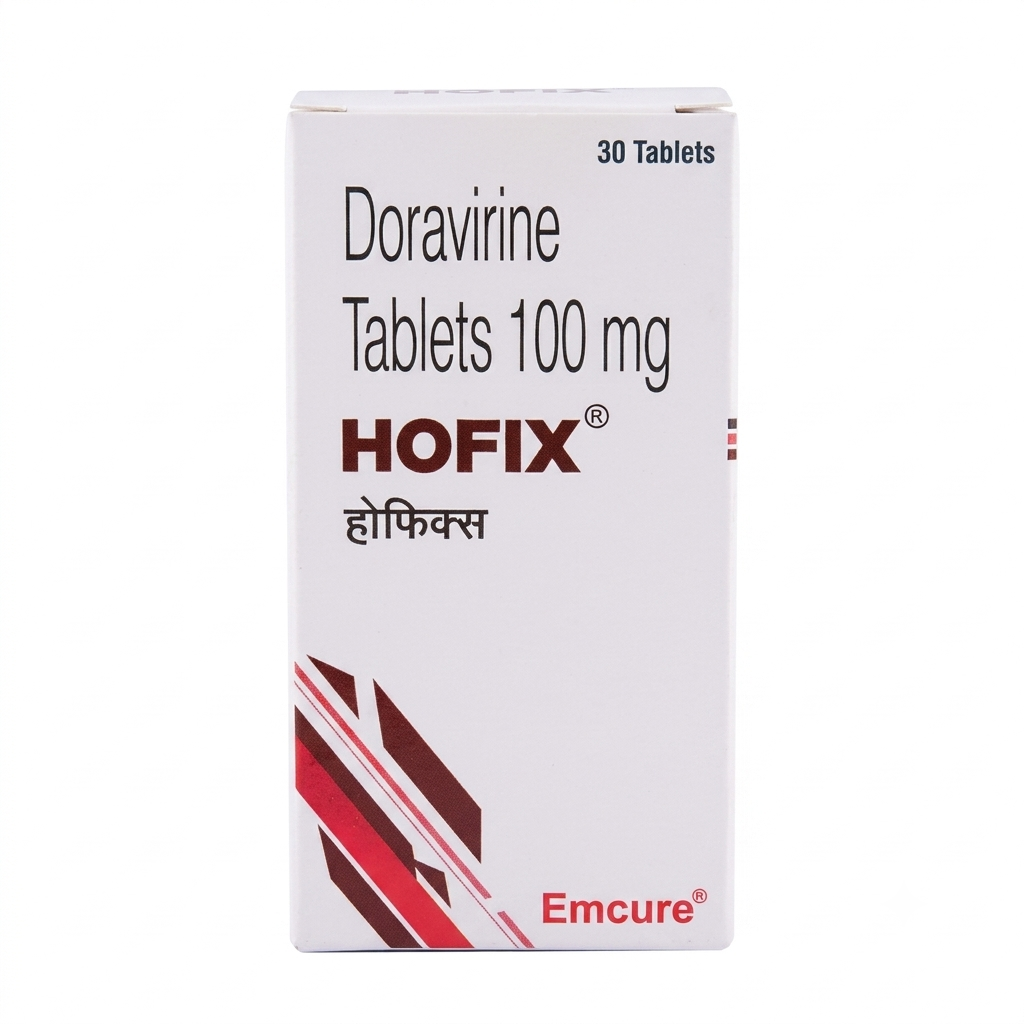



Hofix Tablet
Doravirine 100 mg
HIV-1 antiretroviral treatment medicine for use only under qualified medical supervision.
Important safety sentence: Hofix Tablet should be taken only on the prescription and instructions of the treating doctor. It is not a cure for HIV, it must not be used as self-treatment, and it must not be taken alone unless the HIV specialist has specifically designed the complete regimen.
⚠️ Prescription Review Before Supply
Hofix Tablet contains doravirine 100 mg, a prescription antiretroviral medicine used as part of treatment for HIV-1 infection. Before supply, the current prescription, patient history, HIV treatment plan, medicine list, allergy history, pregnancy or breastfeeding status, liver health, kidney health and any previous HIV medicines should be reviewed by a qualified healthcare professional.
Do not start, stop, switch or share Hofix Tablet without the treating doctor. HIV treatment is planned as a complete regimen. Missing doses, using the medicine alone when combination treatment is required, or taking it with certain medicines can reduce treatment effectiveness and may contribute to resistance.
🧭 Guide Overview
This long-form guide explains the supplied product details, the medical role of doravirine, prescription use, directions, dose information, treatment adherence, interactions, warnings, possible side effects, pregnancy and breastfeeding considerations, liver and kidney questions, food and drink guidance, privacy, ordering, delivery, caregiver support, follow-up and frequently asked questions.
This page is educational product information. It is not a replacement for an HIV specialist, infectious-disease doctor, pharmacist, official package leaflet or local prescribing rules. The current pack and prescription take priority if they differ from any general explanation here.
1. INTRODUCTION
Hofix Tablet is the product name supplied for this description. The active ingredient provided is doravirine 100 mg. Doravirine belongs to the non-nucleoside reverse transcriptase inhibitor group of antiretroviral medicines. It is used for the treatment of HIV-1 infection as part of a complete antiretroviral treatment plan prescribed by a qualified clinician.
HIV treatment is long-term medical care. The purpose of treatment is to suppress HIV replication, protect immune function, reduce the risk of HIV-related illness and support long-term health. A person’s treatment plan may include more than one antiretroviral medicine because HIV can develop resistance when treatment is incomplete, incorrectly taken or exposed to unsuitable drug combinations.
Hofix Tablet is not an antibiotic, not a general immunity supplement and not an emergency replacement for post-exposure prophylaxis. It is not intended for casual use, prevention after a possible exposure, or treatment of another infection unless a specialist has specifically prescribed it for that purpose. People who may have recently been exposed to HIV should seek urgent advice about the correct prevention service rather than taking someone else’s tablets.
2. USES OF HOFIX TABLET
Hofix Tablet is used for the treatment of HIV-1 infection in people for whom doravirine is included in the prescribed antiretroviral regimen. The exact combination depends on previous treatment, resistance testing, viral load, CD4 count, other infections, pregnancy status, liver health, kidney health and the patient’s complete medicine list.
Doravirine may be prescribed with other HIV medicines. The doctor may select a regimen that includes doravirine because of its activity against HIV-1 and the patient’s individual treatment history. The exact reason it has been selected for a particular person must be confirmed by the treating clinician.
Hofix Tablet does not eliminate HIV from the body. It does not guarantee that HIV will not be transmitted. When HIV is consistently suppressed to an undetectable level, the risk of sexual transmission is greatly reduced, but patients should continue to follow current specialist advice about viral load testing, prevention, condoms, sexually transmitted infections and partner communication.
3. DIRECTIONS FOR USE
Take Hofix Tablet exactly as prescribed. The usual doravirine tablet strength supplied for treatment is 100 mg, but the complete regimen and timing must be confirmed from the current prescription. Do not change the number of tablets, skip companion medicines, or alter the schedule because you feel well.
Doravirine may generally be taken with or without food according to official prescribing information. Swallow the tablet as directed with water. Do not crush, split or chew it unless a pharmacist or the current product leaflet specifically confirms that this is appropriate.
Take the medicine at the same time each day when possible. A regular routine helps maintain steady medicine levels and reduces the chance of missed doses. If your doctor has prescribed other antiretroviral medicines, take those medicines according to their own instructions as well.
4. BENEFITS OF HOFIX TABLET
The intended benefit of doravirine is to help reduce HIV-1 replication when it is used correctly as part of a complete antiretroviral regimen. Effective HIV treatment can lower viral load, support immune recovery or preservation, reduce the chance of HIV-related complications and help people live longer, healthier lives.
Benefits are assessed through clinical review and laboratory monitoring, including viral load testing and CD4 testing when appropriate. A person may feel well before treatment is fully suppressing the virus, so feeling better is not a reason to stop. Similarly, a person may not notice an immediate physical change even when the medicine is working.
🌿 Treatment success means consistency
HIV treatment works best when the complete regimen is taken consistently, interactions are avoided, appointments are attended and monitoring results are reviewed. No single tablet should be described as a cure or as a replacement for the complete plan.
5. STORAGE
Keep Hofix Tablet in the original packaging and follow the storage instructions printed on the current pack. Store it in a dry place away from excessive heat, moisture and direct sunlight. Keep it out of sight and reach of children. Do not transfer tablets into an unlabelled container because this can cause confusion with other medicines.
Do not use tablets that are expired, damaged, wet, discoloured, broken in an unusual way or supplied in a package that appears tampered with. Contact the dispensing pharmacy if the pack, label, batch details or seal do not match the order. Do not dispose of unused antiretroviral medicines in a way that could expose children, animals or other people; ask the pharmacist about local disposal arrangements.
6. MEDICINAL BENEFITS
Doravirine is a non-nucleoside reverse transcriptase inhibitor, commonly abbreviated as an NNRTI. Its medicinal role is to inhibit an HIV enzyme called reverse transcriptase. HIV uses this enzyme to convert its genetic material into a form that can become part of the infected cell’s genetic material. By interfering with this process, doravirine helps limit the production of new virus when used in an effective antiretroviral combination.
The benefit depends on HIV being susceptible to doravirine and on the medicine being used as part of a regimen that is active for the individual. Previous HIV treatment, resistance mutations, interruptions and drug interactions can affect the result. A specialist may request resistance testing or review earlier treatment records before selecting or continuing doravirine.
Hofix Tablet does not remove HIV from the body and does not reverse every effect of previous infection. It should be viewed as one component of long-term HIV care, which can also include vaccinations, screening for other infections, mental-health support, sexual-health care, nutrition, exercise and monitoring of cardiovascular, kidney, liver and bone health where appropriate.
7. DRUG WARNINGS
- Use Hofix Tablet only under the supervision of the prescribing doctor or HIV specialist.
- Do not use it as a single self-selected tablet for HIV prevention or after a possible exposure.
- Do not stop the complete HIV regimen without medical advice.
- Tell the doctor about all previous HIV medicines and any known resistance results.
- Tell the doctor about every prescription, over-the-counter medicine, vitamin, herbal product and recreational substance.
- Do not take doravirine with strong enzyme-inducing medicines that can lower doravirine levels.
- Check the current pack because brand, excipient and local prescribing information may vary.
- Seek medical advice for severe rash, facial swelling, breathing difficulty, yellowing of the skin or eyes, dark urine or severe abdominal symptoms.
8. DRUG INTERACTIONS
Doravirine is affected by medicines that change the activity of drug-metabolising enzymes, particularly CYP3A. Strong enzyme inducers can reduce doravirine concentrations and may make HIV treatment less effective. The official prescribing information lists important interacting medicines that must not be used together or require a different HIV regimen.
Medicines of particular concern include rifampin, certain seizure medicines such as carbamazepine, oxcarbazepine and phenytoin, and the herbal product St John’s wort. Rifabutin may require a specific change in the doravirine schedule according to the official product information. Never make that adjustment yourself. A prescriber must decide the correct plan.
Always check before starting a new medicine, including medicines prescribed by another doctor. Tell the dentist, emergency clinician, surgeon and pharmacist that you are taking doravirine. Carry an updated medicine list or keep a secure record on your phone.
9. DRUG INTERACTIONS CHECKER LIST: SAFETY ADVICE
- ✅ Mention Hofix Tablet before any new prescription is issued.
- ✅ Include tuberculosis medicines, seizure medicines, antifungals, antibiotics and herbal products in the check.
- ✅ Specifically ask about rifampin, rifabutin, carbamazepine, oxcarbazepine, phenytoin and St John’s wort.
- ✅ Do not rely on a medicine name alone; provide the strength and full product name.
- ✅ Tell the pharmacist if any medicine was stopped recently because enzyme effects may continue for a period of time.
- ✅ Do not take a friend’s medicine or a non-prescribed supplement during HIV treatment.
- ✅ Ask what to do if an interacting medicine is urgently required.
- ✅ Keep the interaction advice with the current prescription.
10. SIDE EFFECTS OF HOFIX TABLET
Not everyone experiences side effects. Some reactions may be mild and temporary, while others require medical review. The official product information should be checked for the complete adverse-reaction profile. HIV itself, other antiretroviral medicines, infections, stress, diet and unrelated illnesses can also cause symptoms, so do not assume that every symptom is caused by doravirine.
Keep a record of when a symptom began, when the tablet was taken, whether any other medicine was started, and whether the symptom is improving or worsening. This information can help the HIV clinician decide whether the medicine should be continued, monitored or changed.
11. COMMON SIDE EFFECTS OF HOFIX TABLET
- Nausea
- Dizziness
- Headache
- Abnormal or vivid dreams
- Diarrhoea
- Upper-respiratory symptoms such as a blocked or runny nose
- Tiredness or general discomfort
- Stomach upset
These symptoms may have causes other than doravirine. If they are persistent, severe, interfere with daily activities, affect hydration or make it difficult to continue treatment, contact the prescribing doctor or pharmacist. Do not stop treatment suddenly without advice.
12. SEVERE SIDE EFFECTS OF HOFIX TABLET
- Severe or rapidly spreading skin rash
- Blisters, peeling skin or painful sores involving the mouth or eyes
- Swelling of the face, lips, tongue or throat
- Breathing difficulty, fainting or severe dizziness
- Yellowing of the skin or eyes
- Dark urine, pale stools or severe itching with liver symptoms
- Severe abdominal pain or persistent vomiting
- Marked weakness, confusion or symptoms of a serious infection
- New or worsening symptoms after immune recovery begins
Seek urgent medical care for severe allergy, severe rash, breathing difficulty, fainting, jaundice, severe abdominal symptoms or rapidly worsening illness. Take the medicine pack and current medicine list if it is safe to do so. Do not delay urgent care while trying to identify the cause yourself.
13. WHEN PRODUCT NOT TO USE?
- Do not use if you have a known serious allergy to doravirine or any component of the current product.
- Do not use with rifampin unless the HIV specialist has specifically changed the regimen.
- Do not use with carbamazepine, oxcarbazepine, phenytoin or St John’s wort unless the prescriber has confirmed a safe alternative plan; these are important interaction concerns.
- Do not use someone else’s HIV medicine.
- Do not use expired, damaged, unlabelled or tampered tablets.
- Do not use it as emergency post-exposure prophylaxis without an authorised clinical plan.
- Do not stop or restart it repeatedly without medical supervision.
- Do not give it to children unless a qualified clinician has prescribed an age-appropriate regimen.
14. HOW TO USE HOFIX TABLET
Take the tablet exactly as directed by the HIV specialist. Doravirine is commonly prescribed as 100 mg once daily in appropriate adult regimens, but the current prescription and official product information must be followed. It may be taken with or without food according to the official prescribing information.
Swallow the tablet whole with water unless the product leaflet says otherwise. Try to take it at the same time daily. Use a discreet reminder, medication calendar or secure phone alarm if useful. Do not store tablets loose in a bag where they may be lost, damaged or confused with another medicine.
If the doctor changes the HIV regimen, follow the new plan exactly. Do not continue old tablets simply because they remain at home. Ask the pharmacy about safe disposal of discontinued medicines.
15. HOW HOFIX TABLET WORKS
Doravirine binds to and inhibits HIV-1 reverse transcriptase, an enzyme needed for the virus to copy its genetic information. By blocking this step, doravirine helps prevent the virus from efficiently making new copies inside infected cells. It does not directly remove virus already integrated into the body’s cells.
Because HIV can change over time, treatment must use a combination that is active against the person’s virus. Taking doravirine alone when combination therapy is needed, missing repeated doses, or taking interacting medicines can permit HIV replication and may increase the risk of resistance.
The medicine’s success is assessed with viral load and other clinical measures. A reduced viral load is a laboratory result, not something that can be reliably judged from symptoms alone. Continue appointments even if you feel well.
16. DOSAGE
- Use the dose printed on the current prescription and pack.
- The supplied active strength is doravirine 100 mg.
- Official adult prescribing information commonly describes doravirine 100 mg once daily in an appropriate antiretroviral regimen.
- Take it at approximately the same time each day.
- It may generally be taken with or without food, subject to the current product information.
- If rifabutin is prescribed, the HIV specialist must provide the exact modified schedule.
- Never double a dose to compensate for a missed dose unless specifically instructed.
- Do not change the companion HIV medicines.
- Do not stop because viral load improves unless the doctor changes the plan.
17. GENERAL WARNINGS
- Hofix Tablet is prescription HIV treatment, not a general wellness product.
- It does not cure HIV.
- It does not replace safer-sex advice or prevention services.
- It must be used as part of the complete regimen selected by the HIV clinician.
- Resistance can develop when treatment is incomplete or interrupted.
- Drug interactions can reduce the amount of doravirine in the body.
- Do not hide HIV treatment from the healthcare professional who needs to check interactions; clinicians are expected to protect confidentiality.
- Seek help early for rash, jaundice, severe allergy or symptoms of serious infection.
People living with HIV deserve respectful, confidential and stigma-free care. A patient should never be blamed for asking questions about adherence, privacy, sexual health, side effects or treatment changes. Clear communication helps prevent avoidable interruptions and interaction problems.
18. SAFETY ADVICE
🍷 Alcohol
Alcohol does not replace HIV treatment and may make dizziness, poor judgement or adherence problems more likely. Ask the doctor about alcohol if you have liver disease, take other medicines or have difficulty maintaining the daily regimen.
🤰 Pregnancy
Tell the HIV specialist if you are pregnant, planning pregnancy or could become pregnant. Do not stop treatment without medical advice because maintaining HIV control is important.
🍼 Breastfeeding
Discuss breastfeeding with the HIV and obstetric team. HIV transmission and medicine exposure must be considered under current local guidance.
🚗 Driving
Dizziness or headache may affect some people. Avoid driving or machinery if you feel impaired, especially when starting or changing treatment.
🫘 Kidney
Tell the clinician about kidney disease and all medicines. The complete HIV regimen may require kidney-related review even when doravirine itself is not the main concern.
🫀 Liver
Tell the doctor about hepatitis, liver disease, abnormal liver tests or heavy alcohol use. Seek help for jaundice, dark urine or severe abdominal symptoms.
👶 Children
Do not give the adult product to a child without a specialist prescription. Paediatric treatment depends on age, weight, formulation and current guidance.
19. IS HOFIX TABLET HABIT FORMING?
Doravirine is not described as an addictive or habit-forming medicine. However, this does not mean it can be used casually or stopped without advice. It is an essential component of medical treatment for some people, and interruptions can allow HIV to multiply and may contribute to resistance.
20. EXPERT ADVICE
- 🩺 Keep regular HIV appointments even when you feel well.
- 🧬 Ask whether resistance testing or previous treatment history affects the regimen.
- 📋 Carry an up-to-date list of all medicines and supplements.
- ⏰ Use a discreet daily reminder to support adherence.
- 🛑 Never stop treatment suddenly because of embarrassment, travel or mild symptoms without contacting the care team.
- 🔍 Check every new medicine for interactions before taking it.
- 🧪 Attend viral-load and other monitoring tests as scheduled.
- 💜 Ask for confidential support if stigma, depression, substance use, housing, cost or disclosure concerns affect adherence.
If you miss doses because of work, travel, side effects, privacy concerns or difficulty obtaining refills, tell the care team honestly. The goal is to solve the practical problem, not to judge the patient. A clinician may help with reminders, refill planning, regimen review, side-effect management or confidential support services.
21. FOOD AND DRINK
- Doravirine may generally be taken with or without food according to official prescribing information.
- Take it with water and follow the current pack instructions.
- Do not mix it with alcohol as a way to manage treatment anxiety or symptoms.
- Tell the clinician about herbal teas, concentrated extracts and supplements.
- Do not assume that a food or supplement is safe because it is natural.
- St John’s wort is an important interaction concern and should not be used with doravirine.
- Keep hydration and nutrition appropriate to your overall health plan.
22. BEFORE STARTING HOFIX TABLET
Before starting, the doctor should know the HIV treatment history, current viral load if available, resistance history, allergies, pregnancy status, breastfeeding plans, hepatitis status, liver and kidney conditions, and every medicine or supplement being taken. Tell the doctor if tuberculosis treatment, seizure treatment, herbal products or other enzyme-inducing medicines are being used.
Confirm how Hofix Tablet fits with the rest of the regimen. Ask which tablets should be taken together, which should be separated, what to do after a missed dose, how refills will be arranged and which symptoms require urgent help.
23. MISSED DOSE
If you miss a dose, follow the current official leaflet or the specific instructions given by your HIV clinician. General advice for many once-daily medicines is to take the missed dose when remembered unless it is close to the next scheduled dose, but the patient should confirm the correct approach for the actual product and timing. Do not take two doses together unless the prescriber specifically instructs you.
If more than one dose has been missed, contact the HIV care team rather than restarting or changing the regimen independently. Repeated missed doses may affect viral suppression and may require a clinical review.
24. STOPPING HOFIX TABLET
Do not stop Hofix Tablet or the companion HIV medicines without the prescribing doctor. Stopping can allow HIV levels to rise, reduce immune protection and increase the risk of resistance. If a serious reaction is suspected, seek urgent medical help and tell the clinician when the last dose was taken.
If treatment must change because of pregnancy, an interaction, side effects, resistance, a new diagnosis or access problems, the HIV specialist should provide a planned alternative rather than leaving the patient without effective treatment.
25. COMMON HIV TREATMENT AND HEALTH CONSIDERATIONS
HIV care is broader than viral load alone. The healthcare team may review vaccination, hepatitis B and C, tuberculosis, sexually transmitted infections, mental health, cardiovascular risk, kidney health, liver health, bone health, reproductive plans, nutrition and medication access. The exact review depends on the person’s needs.
Do not interpret a low viral load as permission to ignore appointments. Ongoing monitoring confirms that the regimen remains effective and safe and helps identify unrelated health problems early.
26. LIVER AND HEPATITIS SAFETY
Tell the doctor if you have hepatitis B, hepatitis C, cirrhosis, fatty liver disease, abnormal liver tests or regular heavy alcohol use. A person with HIV may take several medicines that affect liver monitoring, and symptoms can overlap with other illnesses.
Seek prompt assessment for yellowing of the skin or eyes, dark urine, pale stools, severe itching, persistent nausea, severe abdominal pain or unusual weakness. Do not wait for the next routine appointment if symptoms are severe.
27. KIDNEY AND BONE HEALTH
The complete antiretroviral regimen, other medicines, age, blood pressure and previous health conditions can influence kidney and bone monitoring. Tell the care team about kidney disease, kidney stones, fractures, low bone density or long-term steroid use. Do not add high-dose supplements without professional advice.
New swelling, reduced urine, severe flank pain, unexplained fractures or marked weakness should be assessed. A doctor may decide whether blood tests, urine tests or other investigations are appropriate.
28. PREGNANCY AND REPRODUCTIVE HEALTH
Tell the HIV specialist as soon as possible if you are pregnant, trying to conceive or may become pregnant. Do not stop treatment without advice. The medical team will consider HIV control, the safety profile of the complete regimen, pregnancy stage, resistance history and current local recommendations.
Reproductive-health counselling can also cover contraception, sexually transmitted infection screening, partner testing, prevention and safe planning. These discussions should be confidential and respectful.
29. BREASTFEEDING
Breastfeeding decisions for people living with HIV depend on national guidance, access to safe alternatives, maternal health, infant care and the treating team’s assessment. Do not make this decision from a product page alone. Discuss it with the HIV specialist and obstetric or paediatric team before delivery or as soon as possible after pregnancy is confirmed.
30. DRIVING AND WORK
Some people may experience dizziness or headache. If you feel impaired, do not drive, use machinery, climb, work at height or perform safety-critical tasks. Once you know how the medicine affects you and the clinician considers it appropriate, normal activities may be possible.
31. ORDERING, PRIVACY AND DELIVERY
The supplied product facts are Hofix Tablet, doravirine 100 mg, pack size 1 × 30 tablets, MRP ₹4,400 and marketed by Emcure Pharmaceuticals Ltd. These details should be checked against the current physical pack, invoice and official product information before dispatch. The live selling price, availability, taxes, delivery terms and prescription review requirements may change according to the pharmacy’s current rules.
HIV status is highly sensitive health information. Use secure pharmacy communication, avoid posting prescriptions or HIV-related reports in public areas, and share only the information required for lawful dispensing and delivery. The pharmacy should maintain appropriate confidentiality and follow applicable privacy and prescription rules.
When the order arrives, check the product name, strength, pack size, batch number, expiry date, seal and physical condition. Do not take tablets if the package appears tampered with or if the contents do not match the prescription. Contact the dispensing pharmacy promptly for verification.
32. CAREGIVER GUIDANCE
A trusted caregiver can help with refill reminders, appointment planning, safe storage, interaction checks and emotional support. The patient should control disclosure of HIV status wherever possible. Do not reveal a person’s diagnosis to relatives, employers, neighbours or delivery personnel without permission, except where law and immediate safety require otherwise.
Caregivers should never pressure a person to share tablets, skip doses, double doses or stop treatment. If adherence is difficult, encourage confidential contact with the HIV care team. Practical barriers can often be addressed through refill planning, reminders, transport support, counselling or regimen review.
33. FOLLOW-UP AND MONITORING
Follow-up may include viral load, CD4 count when clinically indicated, blood counts, liver tests, kidney tests, hepatitis screening, pregnancy testing, resistance review and assessment for other infections. The exact schedule is decided by the treating team.
Bring the product pack or a clear medicine list to appointments. Tell the doctor about missed doses, side effects, travel, refill interruptions, new medicines, supplements, substance use and changes in mental health. Accurate information helps the clinician choose the safest and most effective plan.
34. PATIENT QUESTIONS TO ASK
- What is the complete HIV regimen and which tablet is Hofix Tablet?
- Should I take all medicines at the same time?
- What should I do if I miss one dose or several doses?
- Which tuberculosis or seizure medicines must be avoided?
- Can I use vitamins, herbal products or gym supplements?
- When will my viral load be checked?
- What symptoms require same-day help?
- How should I arrange refills before travel?
- What should I do if the pharmacy cannot supply the medicine?
- How can my privacy be protected during delivery?
- Should I discuss pregnancy or contraception now?
- What is the plan if I develop a rash or liver symptoms?
35. PRACTICAL DAILY ROUTINE
Choose a regular time that fits your daily life and protects privacy. Use a discreet alarm, calendar or medication box if appropriate. Keep a small emergency plan for travel that includes the prescription, medicine list, clinician contact details and enough medicine for the trip, subject to local travel rules.
Do not keep HIV medicines in a place where heat, moisture or other people could damage or expose them. Check the supply before weekends, holidays and travel. Request refills early enough to avoid running out, especially if the medicine is supplied through a special programme or requires prescription review.
36. URGENT HELP GUIDANCE
Seek emergency help for difficulty breathing, swelling of the face or throat, fainting, blistering or peeling rash, severe weakness, confusion, chest pain, severe abdominal pain, repeated vomiting, yellowing of the skin or eyes, or symptoms of a serious infection. Contact the HIV care team promptly for repeated missed doses, inability to obtain medicine, a new interacting prescription, pregnancy, severe side effects or concern that treatment is no longer being taken correctly.
37. QUICK FACTS
| Product name | Hofix Tablet |
|---|---|
| Active ingredient | Doravirine 100 mg |
| Treatment category | Prescription antiretroviral medicine, NNRTI |
| Pack supplied | 1 × 30 tablets |
| MRP supplied | ₹4,400 |
| Marketed by | Emcure Pharmaceuticals Ltd, as supplied |
38. FAQs ABOUT HOFIX TABLET
What is Hofix Tablet?
Hofix Tablet is supplied as doravirine 100 mg, a prescription antiretroviral medicine for HIV-1 treatment.
What is doravirine?
Doravirine is an NNRTI that inhibits HIV-1 reverse transcriptase.
Is Hofix Tablet a cure for HIV?
No. It helps control HIV when used in the complete prescribed regimen but does not remove HIV from the body.
Can I take it alone?
Do not use it alone unless the HIV specialist has explicitly designed that treatment plan. HIV treatment commonly requires a complete active regimen.
What is the usual adult strength?
The supplied strength is 100 mg. Follow the current prescription.
How often is doravirine taken?
Official adult information commonly describes 100 mg once daily, but the current prescription takes priority.
Can it be taken with food?
Doravirine may generally be taken with or without food according to official prescribing information.
What if I miss a dose?
Follow the official leaflet or ask the HIV team. Do not automatically double the next dose.
Can I stop when I feel well?
No. Feeling well does not mean HIV has disappeared. Stop only under medical guidance.
Does it prevent HIV infection?
It is a treatment medicine, not a self-selected prevention product or substitute for authorised prevention services.
Can I use it after exposure?
Do not self-medicate after exposure. Seek urgent medical advice about the correct post-exposure service.
Which medicines interact with doravirine?
Important concerns include rifampin, certain seizure medicines and St John’s wort. Ask the prescriber to check every medicine.
What about rifabutin?
Rifabutin may require a specific doravirine schedule. Only the HIV specialist should make that adjustment.
Can I take St John’s wort?
No, do not use it with doravirine unless a specialist provides a different safe plan. It is a major interaction concern.
Can seizure medicines affect it?
Yes. Some seizure medicines can lower doravirine levels. Provide the full list before treatment is started.
What are common side effects?
Nausea, dizziness, headache, abnormal dreams, diarrhoea and upper-respiratory symptoms may occur.
What rash needs urgent help?
Seek urgent help for severe, spreading, blistering, peeling or painful rash, especially with fever or facial swelling.
Can it affect the liver?
Tell the clinician about liver disease and seek help for jaundice, dark urine or severe abdominal symptoms.
Can I take it in pregnancy?
Tell the HIV specialist immediately. Do not stop or change treatment without a pregnancy-specific medical plan.
Can I breastfeed?
Discuss this with the HIV and obstetric team under current local guidance.
Can children take it?
Only when specifically prescribed in an age-appropriate regimen.
Can I drink alcohol?
Ask the clinician, especially with liver disease or other medicines. Alcohol can make adherence harder.
Can I drive?
Avoid driving if dizziness, headache or another symptom affects alertness.
Is it habit forming?
It is not described as addictive, but it is medically important and must not be stopped casually.
What is the pack size?
The supplied pack information is 1 × 30 tablets.
What is the supplied MRP?
The supplied MRP is ₹4,400. Verify the current pack and live listing before purchase.
Who markets Hofix Tablet?
Emcure Pharmaceuticals Ltd, according to the supplied product details.
Can I share the tablets?
No. HIV treatment is individual and confidential. Never share prescription medicine.
What if I cannot obtain a refill?
Contact the care team or dispensing pharmacy promptly. Do not ration tablets without medical advice.
How is success checked?
Through clinical review and laboratory monitoring, especially viral-load testing.
Does low viral load mean cure?
No. It means treatment is controlling HIV, but ongoing therapy and follow-up remain important.
Can I take vitamins?
Ask a pharmacist or HIV specialist to check the exact product and ingredients.
How should I protect privacy?
Use secure channels, limit disclosure and keep labels and prescriptions private.
39. PATIENT AND CAREGIVER GUIDE
- Confirm the exact prescription and complete regimen.
- Check every medicine and supplement for interactions.
- Take Hofix Tablet at the prescribed time each day.
- Plan refills before the supply runs out.
- Record missed doses and contact the care team if they recur.
- Keep the diagnosis and prescription information private.
- Attend viral-load and other monitoring appointments.
- Seek urgent help for severe rash, allergy, jaundice or serious symptoms.
40. ONGOING FOLLOW-UP
Ongoing follow-up allows the clinician to confirm viral suppression, assess tolerability, review interactions, monitor other health conditions and address barriers to adherence. Treatment can be changed when there is resistance, an interaction, pregnancy, side effects, a new medical condition or another clinically appropriate reason. The patient should not make that change alone.
41. FINAL CHECKLIST
- ☐ I confirmed that the current prescription is for doravirine 100 mg.
- ☐ I know Hofix Tablet is used as part of a complete HIV regimen.
- ☐ I disclosed all medicines, supplements and herbal products.
- ☐ I checked the interaction concerns with the HIV clinician or pharmacist.
- ☐ I know not to use rifampin, certain seizure medicines or St John’s wort without specialist review.
- ☐ I understand that the medicine is not a cure and should not be stopped casually.
- ☐ I know what to do if a dose is missed.
- ☐ I considered pregnancy, breastfeeding, liver and kidney questions.
- ☐ I will keep the product and prescription private and safely stored.
- ☐ I will attend follow-up and viral-load monitoring.
- ☐ I know the emergency symptoms requiring urgent help.
42. SOURCES OF INFORMATION
Use the following official or authoritative sources for general background, prescribing information and HIV-care guidance. Product-specific facts must still be checked against the current Hofix Tablet pack and official leaflet.
- DailyMed: Doravirine tablet prescribing information
- U.S. FDA: Pifeltro doravirine prescribing information
- MedlinePlus: Doravirine
- NIH ClinicalInfo: Guidelines for the Use of Antiretroviral Agents in Adults and Adolescents with HIV
- World Health Organization: HIV treatment
- CDC: Living with HIV and treatment information
- The current Hofix Tablet pack, official package leaflet, manufacturer information and applicable Indian regulatory requirements.
Links and guidance can change. The current authorised label, prescription, doctor, HIV specialist, pharmacist and local regulations take priority. Information for another doravirine brand should not be assumed to cover every excipient, pack instruction or local dispensing requirement for Hofix Tablet.
⚠️ MEDICAL DISCLAIMER
This content is educational product information only. It is not a diagnosis, prescription, personalised HIV treatment plan or substitute for consultation with a doctor, HIV specialist, infectious-disease clinician or pharmacist. Do not use it to self-diagnose HIV, select a regimen, stop treatment, change the dose, manage a drug interaction or delay emergency care.
The current prescription, Hofix Tablet pack, official leaflet, doctor, HIV specialist, pharmacist, local rules and emergency services take priority. Pregnancy, breastfeeding, children’s use, liver disease, kidney disease, previous resistance, other medicines, severe rash, allergy, jaundice and treatment interruptions require individual professional review.
💜 FINAL MEDICAL REMINDER
Hofix Tablet should be taken consistently, privately and exactly as prescribed. Keep your HIV care team informed about every medicine, supplement, side effect, missed dose, pregnancy plan and refill problem. Effective treatment is a complete long-term plan, and timely professional support is always more important than trying to manage HIV alone.





There are no reviews yet.