






💙 Prescription Antiretroviral Medicine
Vonavir Tablet: Composition, Prescription Verification and Safe Ordering Guide
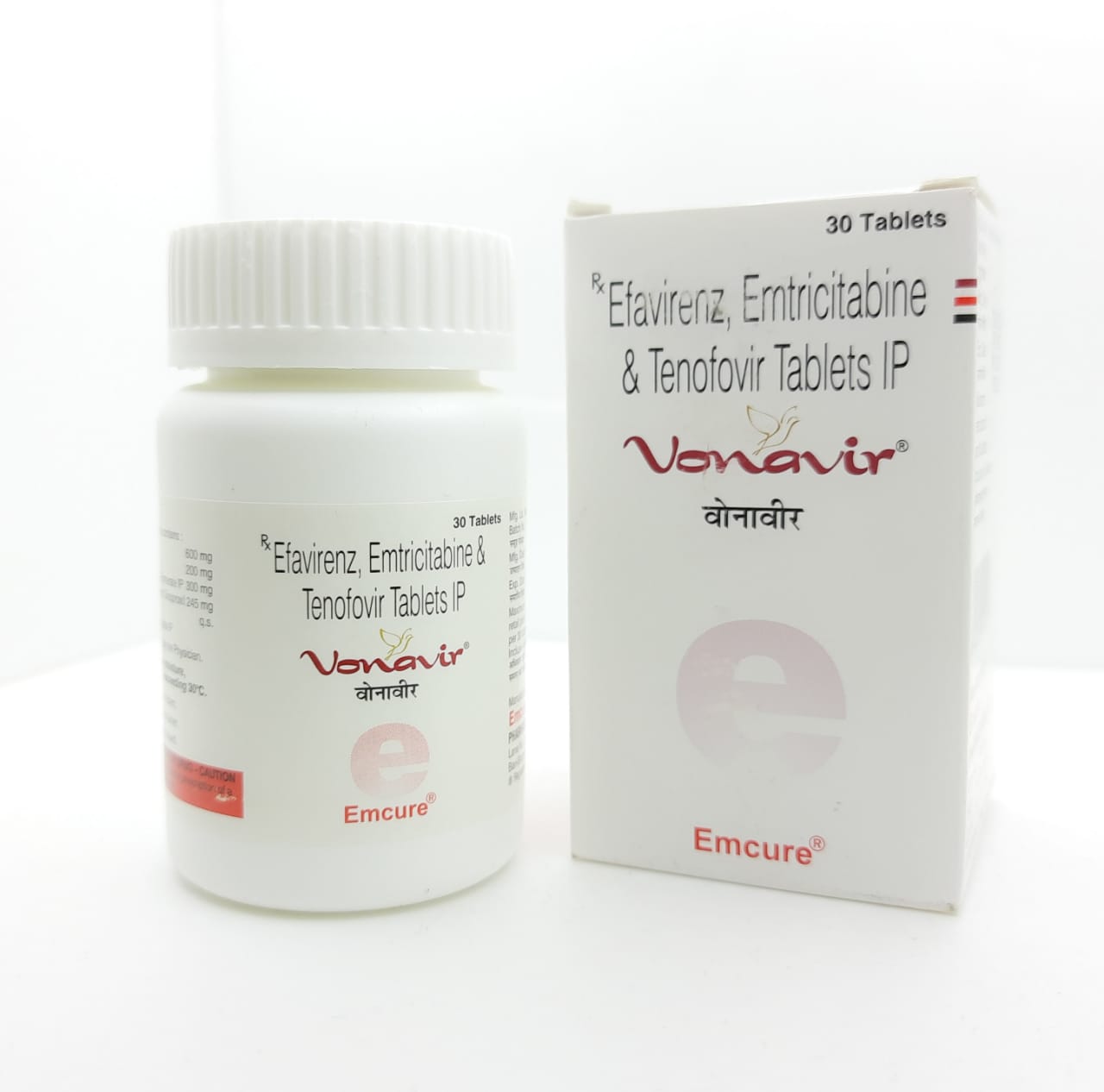
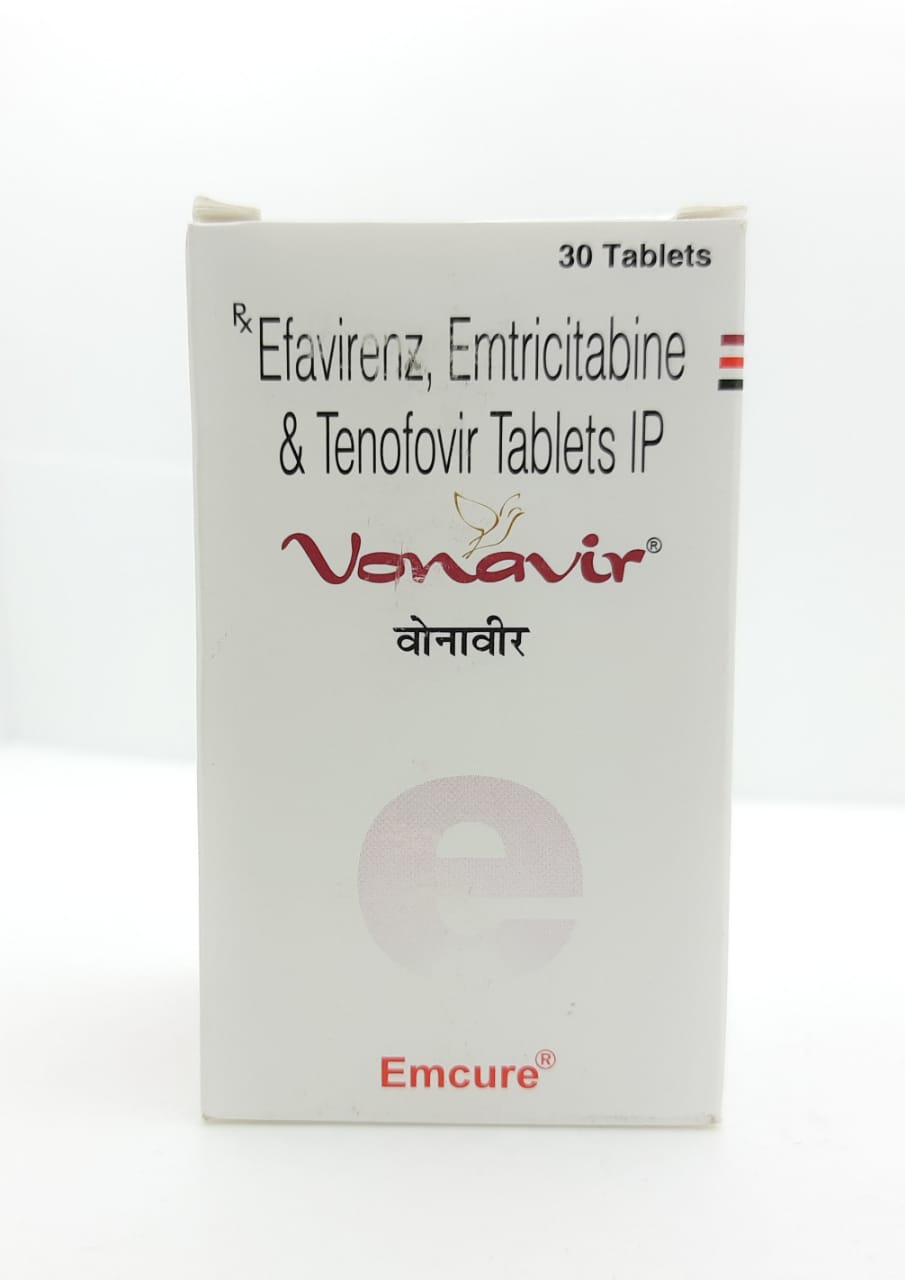
Vonavir Tablet contains Efavirenz IP 600 mg, Emtricitabine IP 200 mg, and Tenofovir Disoproxil Fumarate IP 300 mg in a film-coated tablet. It is a Schedule H prescription drug and should be supplied and used only under the direction of a Registered Medical Practitioner.
🧾 Quick Product Facts
- Product: Vonavir Tablet
- Dosage form: Film-coated tablet
- Efavirenz: 600 mg
- Emtricitabine: 200 mg
- Tenofovir Disoproxil Fumarate: 300 mg
- Supply status: Schedule H prescription medicine
- Safe action: Upload prescription, wait for verification, then place the order as instructed
📤 Ready to Submit a Prescription?
Upload a clear prescription through the approved pharmacy process. Use the product details on the pack and prescription as your reference. Prescription approval, stock, dispatch, and delivery remain subject to pharmacist verification and applicable requirements.
💊 What Is Vonavir Tablet?
Vonavir Tablet is a film-coated prescription medicine containing Efavirenz IP 600 mg, Emtricitabine IP 200 mg, and Tenofovir Disoproxil Fumarate IP 300 mg. These ingredients belong to the antiretroviral medicine group and are used together as part of an HIV treatment plan prescribed by a qualified healthcare professional. This page is intended to help customers understand the labelled composition, prescription requirement, safe purchasing process, and responsible medicine handling. It is not a diagnosis, a personalised treatment plan, or a substitute for consultation with an HIV-care professional.
Use the current prescription and pack as the primary reference. If they disagree with an online description, pause and ask the pharmacist to clarify before taking the medicine.
🧪 Composition and Strength
Each film-coated tablet contains Efavirenz IP 600 mg, Emtricitabine IP 200 mg, and Tenofovir Disoproxil Fumarate IP 300 mg. The strength and ingredients printed on the supplied pack should always be checked before use. Customers should compare the medicine name, active ingredients, strength, manufacturer details, batch number, expiry date, seal, and leaflet with the prescription and the product received. If any detail appears different, unclear, damaged, or inconsistent, do not take the tablet until a pharmacist or prescribing clinician has reviewed it.
Keep communication factual and complete. Mention allergies, pregnancy status, kidney or liver problems, recent hospital care, and every medicine or supplement when speaking with the healthcare team.
📋 Why a Prescription Is Required
Vonavir Tablet is labelled as a Schedule H prescription drug. It must be supplied only against a prescription from a Registered Medical Practitioner. Prescription control is important because antiretroviral treatment depends on the individual patient’s medical history, other medicines, laboratory monitoring, previous treatment exposure, and clinical goals. A prescription also helps the pharmacist confirm the correct product, strength, quantity, and directions before dispatch. A product page cannot safely decide whether this medicine is suitable for a particular person.
A pharmacy review protects the patient by checking the product, prescription, quantity, contact details, and delivery conditions. Review can take time when information is incomplete, so do not submit repeated or conflicting orders.
🩺 Use Only as Prescribed
The correct dose, timing, duration, and combination of medicines must come from the patient’s own prescription and healthcare team. Do not start, stop, extend, reduce, split, or change treatment based only on this product page or on another person’s experience. Do not share tablets with a family member or friend. If the prescription is old, incomplete, difficult to read, or no longer matches the current treatment plan, contact the prescriber or pharmacist before ordering or taking the medicine.
No online page can see the patient’s medical record. Individual decisions must be made by the qualified professional who knows the patient’s history, examination findings, test results, and complete treatment plan.
🔍 Before Ordering
Before placing an order, keep a valid prescription ready and check that the product name and strength match the prescription. Upload a clear, complete image or PDF through the approved prescription-upload process. The patient’s name, prescriber information, date, medicine details, strength, directions, and quantity should be readable. Do not upload unrelated medical records unless they are specifically needed for prescription verification. A pharmacist may need to contact the customer if the document is incomplete or if clarification is required.
Use the current prescription and pack as the primary reference. If they disagree with an online description, pause and ask the pharmacist to clarify before taking the medicine.
📤 Prescription Upload Process
Choose the prescription-upload option, enter accurate contact details, and attach a clear PDF, JPG, or PNG file. Make sure the document is not cropped, blurry, password-protected, or hidden by glare. After submission, the pharmacy team can review the prescription and confirm whether the requested product and quantity can be processed. Uploading a prescription does not by itself guarantee approval, availability, dispatch, or delivery. The final decision must follow prescription verification, pharmacy requirements, and applicable rules.
Keep communication factual and complete. Mention allergies, pregnancy status, kidney or liver problems, recent hospital care, and every medicine or supplement when speaking with the healthcare team.
🛒 Ordering With Verification
Customers may add the product to the order flow only when the pharmacy process allows it, but the order remains subject to prescription review. Keep the order information accurate, including the patient’s name, delivery address, contact number, and email address. Do not place an order for someone else without their permission and a valid prescription. If the pharmacist asks for clarification, reply with accurate information rather than guessing. The pharmacy may hold, modify, or decline an order when verification cannot be completed.
A pharmacy review protects the patient by checking the product, prescription, quantity, contact details, and delivery conditions. Review can take time when information is incomplete, so do not submit repeated or conflicting orders.
⏱️ What Happens After Upload?
After a prescription is uploaded, the pharmacy team may check the medicine name, strength, quantity, date, prescriber details, and other required information. They may also confirm stock, packaging, and delivery details. Review time can vary depending on document quality, working hours, availability, and the need for clarification. Customers should monitor the contact details supplied with the order. If a message is received from the pharmacy, respond carefully and do not send sensitive information to an unverified person or number.
No online page can see the patient’s medical record. Individual decisions must be made by the qualified professional who knows the patient’s history, examination findings, test results, and complete treatment plan.
📦 Check the Pack on Delivery
When the parcel arrives, inspect the outer packaging and the medicine pack before use. Check the product name, composition, strength, manufacturer, batch number, manufacturing details, expiry date, seal, and leaflet. Do not use a pack that is opened, crushed, wet, tampered with, discoloured, or missing important identification details. Contact the pharmacy promptly for guidance. Keep the product, packaging, invoice, and delivery details until the medicine has been checked and accepted.
Use the current prescription and pack as the primary reference. If they disagree with an online description, pause and ask the pharmacist to clarify before taking the medicine.
🧾 Product Identity Matters
Medicines with similar names can have different active ingredients or strengths. Always identify this product by the full name and labelled composition: Efavirenz IP 600 mg, Emtricitabine IP 200 mg, and Tenofovir Disoproxil Fumarate IP 300 mg. Do not rely only on colour, tablet shape, a photograph, or a previous order. If the pack looks different from an earlier supply, ask a pharmacist to verify it. A change in packaging can occur, but the identity must be confirmed before use.
Keep communication factual and complete. Mention allergies, pregnancy status, kidney or liver problems, recent hospital care, and every medicine or supplement when speaking with the healthcare team.
🌙 Taking the Medicine
Follow the exact directions written by the prescriber or pharmacist. Some antiretroviral treatment plans include timing instructions or food-related advice that depends on the patient’s complete regimen. This page does not replace those instructions. Take the medicine in the manner advised for the individual prescription and maintain a consistent routine. If the patient is unsure about timing, swallowing, food instructions, or combining it with other prescribed medicines, ask the healthcare team before taking the next dose.
A pharmacy review protects the patient by checking the product, prescription, quantity, contact details, and delivery conditions. Review can take time when information is incomplete, so do not submit repeated or conflicting orders.
⏰ Consistency and Treatment Routine
Antiretroviral treatment is commonly organised around a regular routine so that the patient can follow the prescribed plan consistently. Use only the reminder method recommended or approved by the healthcare team. Do not change the routine to fit a friend or relative’s schedule. If work, travel, fasting, illness, or another circumstance may affect the routine, discuss it with the prescriber or pharmacist in advance. A product page cannot determine how an individual should manage a missed or delayed dose.
No online page can see the patient’s medical record. Individual decisions must be made by the qualified professional who knows the patient’s history, examination findings, test results, and complete treatment plan.
⚠️ Missed Dose Guidance
If a dose is missed, do not automatically double the next dose. The correct action can depend on when the missed dose was noticed, the patient’s complete regimen, and the prescriber’s instructions. Read the supplied leaflet and contact a qualified pharmacist or healthcare professional for personal guidance. Keep the medicine in its original labelled pack so that the name and strength are available during the conversation. Do not stop the treatment plan silently because of one missed dose or an uncertain situation.
Use the current prescription and pack as the primary reference. If they disagree with an online description, pause and ask the pharmacist to clarify before taking the medicine.
🚫 Do Not Share or Trade
Prescription antiretroviral medicine must not be shared, sold, exchanged, or given to another person. A medicine that is appropriate for one patient may be unsuitable or unsafe for another because of pregnancy status, kidney or liver function, previous treatment, allergies, interactions, or a different HIV-care plan. Keep the product away from children and visitors. If someone has taken the medicine accidentally, seek urgent professional advice and keep the pack available for identification.
Keep communication factual and complete. Mention allergies, pregnancy status, kidney or liver problems, recent hospital care, and every medicine or supplement when speaking with the healthcare team.
🔗 Other Medicines and Supplements
Tell the prescriber and pharmacist about every medicine, supplement, herbal product, vitamin, recreational substance, and non-prescription product being used. Interactions may involve products bought from another pharmacy or online source. Do not assume that a supplement is harmless because it is labelled natural. The healthcare team should review the complete list before treatment is started or changed. If a new medicine is prescribed elsewhere, mention Vonavir Tablet and the full antiretroviral regimen before accepting the new treatment.
A pharmacy review protects the patient by checking the product, prescription, quantity, contact details, and delivery conditions. Review can take time when information is incomplete, so do not submit repeated or conflicting orders.
🍺 Alcohol and Daily Choices
Patients should ask their healthcare professional how alcohol and other substances may affect their treatment plan, alertness, sleep, safety, and ability to follow instructions. This page cannot provide personal clearance for alcohol use. Avoid making decisions based on online comments or another patient’s experience. If the medicine causes dizziness, unusual dreams, drowsiness, confusion, or other symptoms, avoid unsafe activities and contact a healthcare professional for guidance.
No online page can see the patient’s medical record. Individual decisions must be made by the qualified professional who knows the patient’s history, examination findings, test results, and complete treatment plan.
🧠 Possible Side Effects
Every medicine can cause unwanted effects, although not every patient experiences them. Efavirenz-containing treatment may be associated with symptoms that affect sleep, mood, alertness, or the nervous system in some people, while the other ingredients may require clinical monitoring as directed by the healthcare team. This page does not list every possible reaction. Read the supplied leaflet, report concerning or persistent symptoms, and do not stop treatment without professional guidance unless emergency services instruct otherwise.
Use the current prescription and pack as the primary reference. If they disagree with an online description, pause and ask the pharmacist to clarify before taking the medicine.
🚨 Seek Urgent Medical Help
Seek urgent medical help for severe breathing difficulty, swelling of the face or throat, fainting, severe rash, blistering or peeling skin, serious confusion, suicidal thoughts, severe weakness, unusual yellowing, or any symptom that feels life-threatening. Do not wait for an online reply when emergency care may be needed. Take the medicine pack, prescription, and list of other medicines if possible. A pharmacist can help with routine questions, but emergencies require immediate medical attention.
Keep communication factual and complete. Mention allergies, pregnancy status, kidney or liver problems, recent hospital care, and every medicine or supplement when speaking with the healthcare team.
🧴 Rash and Skin Changes
A new rash or skin change should be taken seriously, especially if it spreads quickly, becomes painful, forms blisters, involves the mouth or eyes, or occurs with fever or swelling. Do not apply a random cream or take another medicine to mask the symptom without professional advice. Contact the prescribing team promptly and describe when the rash began, where it appeared, and what other symptoms are present. For severe symptoms, seek urgent care.
A pharmacy review protects the patient by checking the product, prescription, quantity, contact details, and delivery conditions. Review can take time when information is incomplete, so do not submit repeated or conflicting orders.
🧠 Mood, Sleep, and Alertness
Patients should tell their healthcare team about new or worsening mood changes, unusual dreams, anxiety, depression, confusion, severe sleep disturbance, or thoughts of self-harm. Some people may also feel sleepy, dizzy, or less alert. Until the effect is understood, take care with driving, heights, machinery, and other activities that require full alertness. A trusted person can help monitor concerning changes, but professional advice remains essential.
No online page can see the patient’s medical record. Individual decisions must be made by the qualified professional who knows the patient’s history, examination findings, test results, and complete treatment plan.
🧪 Monitoring and Follow-Up
The prescriber may recommend follow-up appointments and laboratory tests to monitor treatment response, kidney function, liver health, blood counts, or other clinically relevant measures. The exact tests and schedule are individual decisions. Do not skip follow-up because the patient feels well. Do not interpret laboratory results alone or change medicine based on a result seen online. Keep appointments and tell the healthcare team about missed doses, side effects, new medicines, and changes in health.
Use the current prescription and pack as the primary reference. If they disagree with an online description, pause and ask the pharmacist to clarify before taking the medicine.
🫀 Kidney and Liver Information
Patients with kidney or liver conditions should tell the prescriber before using this medicine. Tenofovir disoproxil fumarate and other components may require clinical consideration in patients with existing conditions or other risk factors. Never adjust the amount or frequency yourself. Tell the healthcare team about previous abnormal tests, long-term medicines, dehydration, hospital visits, and any known organ disease. Only the treating professional can decide whether the prescribed regimen remains appropriate.
Keep communication factual and complete. Mention allergies, pregnancy status, kidney or liver problems, recent hospital care, and every medicine or supplement when speaking with the healthcare team.
🤰 Pregnancy and Breastfeeding
Tell the prescriber if the patient is pregnant, planning pregnancy, or breastfeeding. Do not start or stop antiretroviral treatment without specialist advice. Pregnancy and breastfeeding decisions require a complete clinical assessment and may involve more than one medicine. The product page cannot provide individual pregnancy advice. Contact the treating HIV-care professional before ordering if pregnancy status has changed or if the patient is unsure about the safest treatment plan.
A pharmacy review protects the patient by checking the product, prescription, quantity, contact details, and delivery conditions. Review can take time when information is incomplete, so do not submit repeated or conflicting orders.
👶 Children and Household Safety
Keep the medicine out of reach and sight of children. The labelled adult strength should not be given to a child unless a qualified clinician has specifically prescribed it. Store the pack in a place where children, guests, and pets cannot access it. Do not keep loose tablets in an unmarked container. If a child or another person swallows the medicine, seek urgent medical advice and show the original pack immediately.
No online page can see the patient’s medical record. Individual decisions must be made by the qualified professional who knows the patient’s history, examination findings, test results, and complete treatment plan.
🌡️ Storage Instructions
Store the medicine according to the instructions printed on the supplied pack and leaflet. Keep it in the original packaging, away from excessive heat, moisture, direct sunlight, and unauthorised access. Do not transfer tablets into an unlabelled container. Do not use tablets that have changed appearance or have been exposed to unsuitable conditions without asking a pharmacist. Follow any specific storage instruction on the current pack because packaging information takes priority over general online guidance.
Use the current prescription and pack as the primary reference. If they disagree with an online description, pause and ask the pharmacist to clarify before taking the medicine.
🗓️ Expiry and Batch Details
Never use an expired medicine. Check the expiry date before opening and again before taking a tablet. Keep the batch number and packaging because they help the pharmacy investigate a product question, quality concern, recall, or replacement request. Do not remove or cover the printed batch and expiry information. If the date is unclear, the pack is damaged, or the printed details do not match the invoice, pause use and contact the pharmacy.
Keep communication factual and complete. Mention allergies, pregnancy status, kidney or liver problems, recent hospital care, and every medicine or supplement when speaking with the healthcare team.
♻️ Safe Disposal
Do not flush unused tablets or throw them where children, animals, or other people can find them. Ask a pharmacist about the safest local disposal method for unused or expired prescription medicine. Keep the original pack until disposal guidance is received. Do not give unused tablets to another patient, even if the medicine is unopened. Disposal should protect household safety, the environment, and the confidentiality of the patient’s treatment.
A pharmacy review protects the patient by checking the product, prescription, quantity, contact details, and delivery conditions. Review can take time when information is incomplete, so do not submit repeated or conflicting orders.
🔐 Privacy During Prescription Upload
Prescription documents can contain sensitive health and identity information. Upload only through the pharmacy’s approved process and provide accurate contact details. Avoid sharing prescription images in public comments, social media posts, or unverified chat accounts. Check that the recipient is the intended pharmacy before sending a document. The pharmacy should handle submitted information according to its privacy process and applicable requirements. Customers should retain only the records they need for their own care and order history.
No online page can see the patient’s medical record. Individual decisions must be made by the qualified professional who knows the patient’s history, examination findings, test results, and complete treatment plan.
📞 When to Contact the Pharmacist
Contact the pharmacist when the pack differs from the order, the prescription cannot be read, the medicine is unavailable, the patient has an interaction concern, a dose instruction is unclear, or a side effect is worrying. Provide the product name, strength, batch information when relevant, and a clear description of the question. Do not hide a symptom because of concern that an order may be delayed. Accurate information helps the pharmacy protect the patient.
Use the current prescription and pack as the primary reference. If they disagree with an online description, pause and ask the pharmacist to clarify before taking the medicine.
🧑⚕️ Registered Medical Practitioner
The prescription must come from a Registered Medical Practitioner, and the treatment plan should be reviewed by a clinician familiar with the patient’s HIV care. Online product information cannot replace examination, testing, counselling, or follow-up. A pharmacist can help with product handling, prescription checks, and medicine-use questions within their role. For diagnosis, treatment changes, serious symptoms, or test interpretation, contact the appropriate healthcare professional.
Keep communication factual and complete. Mention allergies, pregnancy status, kidney or liver problems, recent hospital care, and every medicine or supplement when speaking with the healthcare team.
🛡️ Responsible Product Claims
This page does not promise a cure, guaranteed viral suppression, instant improvement, prevention of every infection, or a particular result. Treatment outcomes depend on the patient’s clinical situation, the complete regimen, adherence, follow-up, resistance history, and professional care. Do not use testimonials or marketing language as a substitute for evidence-based advice. The only reliable treatment decisions are those made with the patient’s qualified healthcare team.
A pharmacy review protects the patient by checking the product, prescription, quantity, contact details, and delivery conditions. Review can take time when information is incomplete, so do not submit repeated or conflicting orders.
📚 Educational Information
The information on this page is educational and purchasing-related. It explains the labelled composition and responsible prescription workflow but is not an official replacement for the current package insert, prescription, pharmacist counselling, or medical consultation. Product information can change because of regulatory updates, manufacturer changes, packaging revisions, or updated clinical guidance. Always give priority to the current supplied pack and instructions from the treating professional.
No online page can see the patient’s medical record. Individual decisions must be made by the qualified professional who knows the patient’s history, examination findings, test results, and complete treatment plan.
✅ Customer Checklist
Before ordering, confirm that the prescription is valid and readable, the patient details are correct, and the requested product matches the prescribed composition and strength. After delivery, check the seal, label, batch, expiry date, leaflet, and physical condition. Before use, follow the prescribed directions and disclose all other medicines and health conditions. During treatment, attend follow-up care and report side effects. This checklist supports safe purchasing but does not replace professional advice.
Use the current prescription and pack as the primary reference. If they disagree with an online description, pause and ask the pharmacist to clarify before taking the medicine.
🧾 Order Information
Enter the patient’s and recipient’s information carefully during checkout. Use a delivery address where the parcel can be received privately and securely. Keep the order number and pharmacy communication available in case clarification is needed. Do not place duplicate orders while a prescription review is pending unless the pharmacy instructs you to do so. If contact details change, notify the pharmacy promptly so the verification and delivery process is not interrupted.
Keep communication factual and complete. Mention allergies, pregnancy status, kidney or liver problems, recent hospital care, and every medicine or supplement when speaking with the healthcare team.
🚚 Dispatch and Delivery
Dispatch may depend on prescription approval, stock confirmation, payment status, address validation, pharmacist review, and applicable delivery conditions. A submitted order is not the same as a clinically approved prescription. Do not consume a product merely because it has been delivered; inspect the pack first. If a parcel arrives damaged or appears tampered with, document the issue, keep the packaging, and contact the pharmacy before opening or using the medicine.
A pharmacy review protects the patient by checking the product, prescription, quantity, contact details, and delivery conditions. Review can take time when information is incomplete, so do not submit repeated or conflicting orders.
🧭 Travel and Routine Changes
Before travel, discuss the treatment schedule, storage, documentation, and supply planning with the healthcare team. Keep medicine in its original labelled pack and carry the prescription or supporting documentation when appropriate. Do not leave tablets in a hot vehicle, exposed luggage area, or damp environment. Time-zone changes, missed doses, and restricted access to care should be planned with a professional rather than solved by changing the regimen independently.
No online page can see the patient’s medical record. Individual decisions must be made by the qualified professional who knows the patient’s history, examination findings, test results, and complete treatment plan.
🧩 Complete Treatment Plan
Vonavir Tablet is one product within a broader HIV-care plan. The patient’s care may also include laboratory monitoring, adherence support, counselling, prevention advice, treatment of other conditions, and other prescribed medicines. Do not assume that this single product replaces the full regimen. Ask the prescriber what the complete plan includes and which medicines should be taken together. Keep an up-to-date list so every healthcare professional can review it.
Use the current prescription and pack as the primary reference. If they disagree with an online description, pause and ask the pharmacist to clarify before taking the medicine.
💬 Questions Worth Asking
Patients may ask the prescriber or pharmacist what the medicine is for, how and when to take it, what to do if a dose is missed, which symptoms require urgent attention, how other medicines may interact, what monitoring is needed, and how to store or dispose of the product. It is also reasonable to ask how prescription verification and delivery will work. Writing questions down before an appointment can make the conversation clearer and more complete.
Keep communication factual and complete. Mention allergies, pregnancy status, kidney or liver problems, recent hospital care, and every medicine or supplement when speaking with the healthcare team.
🔎 Authenticity and Quality Concerns
If the packaging, printing, seal, tablet appearance, smell, or product details seem unusual, do not take the medicine until the concern has been reviewed. Keep the pack and proof of purchase. Do not send the medicine to an unknown source for testing or accept an unverified replacement. Contact the pharmacy through its approved channel and provide photographs only when requested through that channel. Quality concerns should be handled carefully and promptly.
A pharmacy review protects the patient by checking the product, prescription, quantity, contact details, and delivery conditions. Review can take time when information is incomplete, so do not submit repeated or conflicting orders.
📝 Returns and Pharmacy Policies
Prescription medicine returns, replacements, cancellations, and refunds may depend on the condition of the package, prescription status, storage requirements, delivery condition, and applicable pharmacy policy. Do not open or use a product if you believe it is the wrong item or damaged. Contact the pharmacy before returning anything and follow the instructions provided. A return decision does not change the need to seek medical advice about treatment continuity.
No online page can see the patient’s medical record. Individual decisions must be made by the qualified professional who knows the patient’s history, examination findings, test results, and complete treatment plan.
🎯 Prescription Upload and Order Action
To begin, use the Upload Prescription option, provide the requested contact information, and attach a clear prescription document. After the pharmacy reviews it, proceed with the order only as instructed. If you already have a valid prescription, keep the original available for comparison. If you need help before uploading, contact the pharmacy team through the approved contact option. Your order should be based on verified prescription information, not on a product-page recommendation.
Use the current prescription and pack as the primary reference. If they disagree with an online description, pause and ask the pharmacist to clarify before taking the medicine.
❤️ Final Patient Safety Reminder
Vonavir Tablet should be used only for the person named on the prescription and only according to the instructions of the HIV-care professional. The medicine can be an important part of a treatment plan, but no product page can evaluate an individual patient’s condition. Before ordering, upload a valid prescription through the approved process. Before taking the product, compare the name, strength, ingredients, pack size, manufacturer, batch number, expiry date, seal, and leaflet with the prescription. During treatment, take the medicine consistently, attend follow-up tests, report side effects honestly, and never double doses or stop treatment silently.
Keep communication factual and complete. Mention allergies, pregnancy status, kidney or liver problems, recent hospital care, and every medicine or supplement when speaking with the healthcare team.
📌 Medical Disclaimer
This product description is for education and responsible purchasing preparation only. It is not medical advice, diagnosis, prescription, treatment, or a guarantee of safety or effectiveness for any individual. It does not replace the current pack insert, a Registered Medical Practitioner, a qualified pharmacist, HIV-care counselling, laboratory testing, or emergency services. Product composition and packaging information should be verified against the supplied pack. Always follow the patient’s own prescription and seek professional guidance for personal questions.
A pharmacy review protects the patient by checking the product, prescription, quantity, contact details, and delivery conditions. Review can take time when information is incomplete, so do not submit repeated or conflicting orders.
🧭 How to Read the Label
Start with the medicine name, dosage form, active ingredients, strength, manufacturer, batch number, expiry date, storage instruction, and prescription caution. Read every line instead of relying on the front label alone. The composition on the supplied pack is the practical reference for the product received. If the print is too small, damaged, covered, or different from the order, contact the pharmacy before taking the tablet. Do not use a photograph from a previous order to identify a new pack. Packaging may change, but the medicine identity must be confirmed. Keep the leaflet with the pack because it contains product-specific information that may be longer than the online description. Ask the pharmacist to explain any word that is unclear, including abbreviations, strength, timing, or storage wording. A careful label check is a simple but important step in preventing product mix-ups.
Keep the current prescription, pack, leaflet, and professional advice together. If any part of the information is unclear or appears inconsistent, pause and ask the pharmacist for clarification before use. Safe ordering depends on accurate details, private communication, verified supply, and respect for the patient’s individual treatment plan.
🧰 Keeping a Medicine Record
A simple personal medicine record can help the patient and healthcare team communicate clearly. Record the product name, composition, strength, date received, batch number, expiry date, prescriber, pharmacy, and any other medicines taken. Add notes about questions or symptoms to discuss at the next appointment. Do not use the record to change treatment independently. Its purpose is to reduce confusion during appointments, travel, pharmacy calls, or urgent care. Keep the record private because it may contain sensitive health information. A printed list can be useful when a phone is unavailable, while a secure digital copy may help during travel. The current prescription and clinician instructions always take priority over an old personal record.
Keep the current prescription, pack, leaflet, and professional advice together. If any part of the information is unclear or appears inconsistent, pause and ask the pharmacist for clarification before use. Safe ordering depends on accurate details, private communication, verified supply, and respect for the patient’s individual treatment plan.
🧼 Handling Tablets Carefully
Wash and dry hands before handling tablets, especially when several household members use medicines. Keep tablets in the original labelled pack and avoid placing them on unclean or wet surfaces. Do not crush, chew, split, dissolve, or mix the tablet unless the prescription, leaflet, or pharmacist specifically permits that method. Do not remove tablets from their packaging far in advance. If a tablet is dropped, contaminated, cracked, or changed in appearance, ask the pharmacist what to do. Do not replace a questionable tablet with another person’s medicine. Safe handling includes keeping the product away from food preparation areas, children, pets, and visitors. These practical habits do not change the prescribed treatment, but they help protect the identity and condition of the medicine.
Keep the current prescription, pack, leaflet, and professional advice together. If any part of the information is unclear or appears inconsistent, pause and ask the pharmacist for clarification before use. Safe ordering depends on accurate details, private communication, verified supply, and respect for the patient’s individual treatment plan.
🧑🤝🧑 Support From Trusted People
Some patients find it helpful to involve a trusted person in reminders, prescription uploads, appointment planning, or pharmacy communication. The patient should decide who may receive health information and should give permission before documents are shared. A support person must not alter the treatment plan, hide symptoms, or make clinical decisions without the patient and healthcare team. If the patient feels unsafe, severely unwell, confused, or at risk of self-harm, seek urgent professional help rather than relying only on a family member. Support can improve communication, but privacy and patient choice remain important. The pharmacy may need to confirm authorisation before discussing an order with another person.
Keep the current prescription, pack, leaflet, and professional advice together. If any part of the information is unclear or appears inconsistent, pause and ask the pharmacist for clarification before use. Safe ordering depends on accurate details, private communication, verified supply, and respect for the patient’s individual treatment plan.
🧳 Keeping Medicine During Travel
When travelling, plan early with the treating healthcare professional and pharmacy. Keep the medicine in its original labelled pack and carry the prescription or supporting documentation where appropriate. Do not place the only supply in checked luggage if that could make it inaccessible. Protect the pack from extreme heat, moisture, direct sunlight, and pressure. Do not transfer tablets into a plain pouch because identification may become difficult. Travel can change meal times, sleep, time zones, and access to care, so ask for personal guidance before departure. If a pack is lost, stolen, damaged, or left behind, contact the healthcare team rather than borrowing medicine or buying an unknown substitute. The correct response depends on the patient’s regimen and circumstances.
Keep the current prescription, pack, leaflet, and professional advice together. If any part of the information is unclear or appears inconsistent, pause and ask the pharmacist for clarification before use. Safe ordering depends on accurate details, private communication, verified supply, and respect for the patient’s individual treatment plan.
🔄 Changes in Treatment
A healthcare professional may change treatment after reviewing symptoms, laboratory results, interactions, pregnancy status, kidney or liver function, adherence, or other clinical information. If a new prescription is issued, compare it carefully with the previous one and ask what should happen to the old supply. Do not continue, stop, or combine products based on assumption. Tell every healthcare professional about the change so duplicate ingredients and interactions can be considered. Keep old packs separate from the current supply until the pharmacist explains disposal. An online product page cannot decide whether a change is appropriate. The patient should follow the newest confirmed prescription and keep a record of when the change was made.
Keep the current prescription, pack, leaflet, and professional advice together. If any part of the information is unclear or appears inconsistent, pause and ask the pharmacist for clarification before use. Safe ordering depends on accurate details, private communication, verified supply, and respect for the patient’s individual treatment plan.
📅 Refills and Continuity
Plan refills before the current supply runs out, while following the pharmacy and prescriber process. A refill may require a new prescription, an updated review, stock confirmation, or a change in quantity. Do not wait until the last minute if appointments, travel, holidays, or delivery delays could affect continuity. Do not order extra quantities without approval and do not keep unused medicine as an informal reserve for another person. If a refill cannot be obtained on time, contact the treating team promptly for a safe plan. Do not stop treatment silently because a delivery is delayed. The pharmacy can explain order status, but only the healthcare team can give personal clinical advice about an interruption.
Keep the current prescription, pack, leaflet, and professional advice together. If any part of the information is unclear or appears inconsistent, pause and ask the pharmacist for clarification before use. Safe ordering depends on accurate details, private communication, verified supply, and respect for the patient’s individual treatment plan.
🧠 Avoiding Online Confusion
Online comments, videos, testimonials, and search results can contain incomplete or inaccurate information. They may describe another formulation, another strength, another country, or a different treatment plan. Do not compare your prescription with an anonymous post and do not copy a dosage schedule from a stranger. Use this page only for labelled product and ordering information. For personal decisions, use the prescription, current leaflet, pharmacist, and treating clinician. Be especially cautious with claims that promise instant results, a guaranteed cure, or a substitute for regular care. Responsible information should explain limits as well as benefits. If online information conflicts with the healthcare team, pause and ask the professional to clarify rather than making a rapid change.
Keep the current prescription, pack, leaflet, and professional advice together. If any part of the information is unclear or appears inconsistent, pause and ask the pharmacist for clarification before use. Safe ordering depends on accurate details, private communication, verified supply, and respect for the patient’s individual treatment plan.
🧯 If an Order Has a Problem
If the wrong product, wrong strength, damaged parcel, incomplete quantity, or unclear pack is received, do not take the medicine until the pharmacy has reviewed the issue. Keep the parcel, invoice, outer packaging, and product pack. Record the order number and the date received. Contact the pharmacy through the approved channel and describe the problem clearly. Do not send the product to an unknown address or accept a replacement from an unverified source. If the patient is close to missing a prescribed dose, contact the treating healthcare team promptly as well. A delivery problem and a medical emergency are different: emergency symptoms require urgent medical care, not only a routine order message.
Keep the current prescription, pack, leaflet, and professional advice together. If any part of the information is unclear or appears inconsistent, pause and ask the pharmacist for clarification before use. Safe ordering depends on accurate details, private communication, verified supply, and respect for the patient’s individual treatment plan.
📖 Reading the Patient Leaflet
The current patient leaflet supplied with the product is an important source of product-specific information. Read it before use and keep it for future reference. It may include warnings, precautions, possible side effects, storage details, instructions for handling a missed dose, and information about medicines that require professional review. The leaflet may be updated or may differ between packs, so do not rely on a saved screenshot from an earlier order. If the leaflet is missing, unreadable, or appears unrelated to the pack, ask the pharmacy before taking the tablet. A leaflet supports counselling but does not replace a prescription or clinical consultation.
Keep the current prescription, pack, leaflet, and professional advice together. If any part of the information is unclear or appears inconsistent, pause and ask the pharmacist for clarification before use. Safe ordering depends on accurate details, private communication, verified supply, and respect for the patient’s individual treatment plan.
🌿 Herbal and Traditional Products
Tell the healthcare team about herbal, traditional, nutritional, bodybuilding, sexual-health, and recreational products. These products can affect treatment, sleep, mood, organs, laboratory tests, or adherence even when they are sold without a prescription. Do not stop a prescribed medicine to begin a supplement, and do not assume that a product is safe because it is labelled herbal. Keep packaging or a photograph of the ingredient list so the pharmacist can review it. Be honest about all products; accurate information helps the professional make a safer assessment. If a product is marketed with a cure claim or says that prescription treatment is unnecessary, treat that claim as a warning sign and discuss it with a qualified healthcare professional.
Keep the current prescription, pack, leaflet, and professional advice together. If any part of the information is unclear or appears inconsistent, pause and ask the pharmacist for clarification before use. Safe ordering depends on accurate details, private communication, verified supply, and respect for the patient’s individual treatment plan.
🫶 Respectful and Private Care
HIV care is personal and deserves accurate, respectful, confidential communication. Customers should not be pressured to disclose their diagnosis publicly or share a prescription in an open group. Use a private setting for uploads and order conversations. The patient may ask the pharmacy how documents are received, who can access them, and how communication is handled. Use accurate contact information but avoid sending sensitive files to an unverified account. A respectful pharmacy process should focus on safe supply and clear counselling, without judgement. If a customer needs language or accessibility support, mention it to the pharmacy so communication can be made clearer.
Keep the current prescription, pack, leaflet, and professional advice together. If any part of the information is unclear or appears inconsistent, pause and ask the pharmacist for clarification before use. Safe ordering depends on accurate details, private communication, verified supply, and respect for the patient’s individual treatment plan.
🏁 A Safe Next Step
The safest next step is practical: confirm the medicine details on the current pack, keep a valid prescription ready, upload a clear document through the approved process, and wait for pharmacy verification. Review the order before payment and make sure the product, strength, patient, quantity, address, and contact details are correct. After delivery, inspect the pack before use. During treatment, follow the prescriber’s directions and attend scheduled care. If symptoms, interactions, pregnancy, organ disease, or a missed dose create uncertainty, contact the healthcare team instead of guessing. This product page supports an informed order; it does not make a clinical decision for the patient.
Keep the current prescription, pack, leaflet, and professional advice together. If any part of the information is unclear or appears inconsistent, pause and ask the pharmacist for clarification before use. Safe ordering depends on accurate details, private communication, verified supply, and respect for the patient’s individual treatment plan.
🛒 Submit Prescription and Continue to Order
Use the pharmacy’s approved Upload Prescription option to submit a readable prescription. After verification, follow the pharmacy’s instructions to continue with the order. If the prescription cannot be verified, do not substitute another medicine or change the strength yourself.
📊 Product Information Summary
| Item | Information | Customer action |
|---|---|---|
| Dosage form | Film-coated tablet | Check the supplied pack and leaflet |
| Composition | Efavirenz IP 600 mg; Emtricitabine IP 200 mg; Tenofovir Disoproxil Fumarate IP 300 mg | Match the label with the prescription |
| Prescription status | Schedule H prescription drug | Upload a valid prescription |
| Use | Only as directed by a Registered Medical Practitioner | Do not self-start, stop, or change treatment |
| Storage | Follow the current pack and leaflet | Keep in original pack and away from children |










Vinayak –
Best ? service and shipping good price thank you
triveni nayi –
thanks hivhub , its long expyri 2023 good sir
shafu mala –
all ok but the delivery day 4rth day i received
Shreenivash –
good rate