


INTRODUCTION
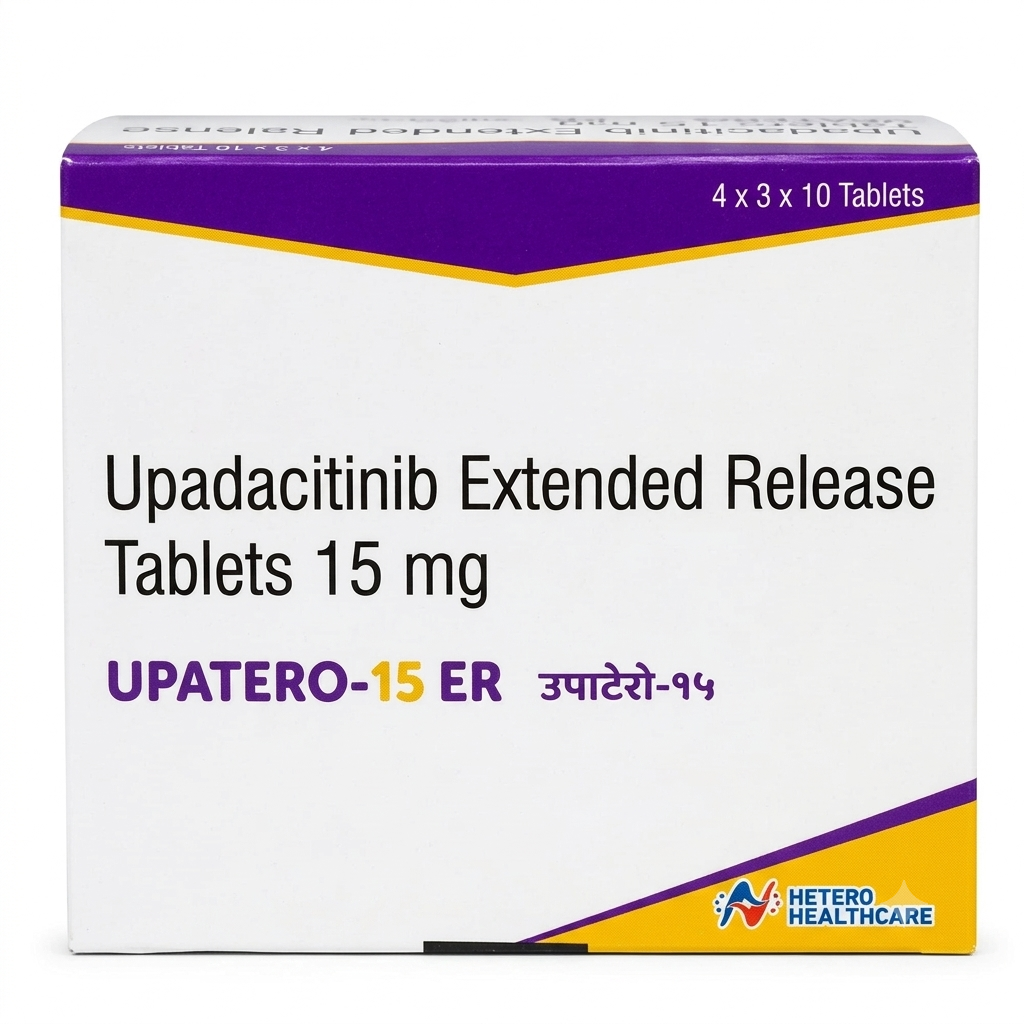
UPATERO-15 ER contains Upadacitinib Extended Release 15 mg. The box shown for this product states “Upadacitinib Extended Release Tablets 15 mg” and shows a pack of 4 x 3 x 10 tablets. The product is manufactured by Hetero Healthcare, as printed on the pack. Upadacitinib belongs to a group of medicines called Janus kinase, or JAK, inhibitors. It changes selected immune-system signals and may reduce inflammation in conditions such as rheumatoid arthritis, psoriatic arthritis, axial spondyloarthritis, atopic dermatitis, ulcerative colitis and Crohn’s disease when prescribed for an approved indication.
UPATERO-15 ER is a prescription medicine. The exact reason for prescribing it, the starting dose, the duration of therapy and whether it should be used alone or with another medicine must be decided by a qualified clinician. It is not a general painkiller, antibiotic or steroid. Because it modifies immune activity, it can increase the risk of infections and requires appropriate screening and monitoring.
USES OF UPATERO-15 ER
Upadacitinib may be prescribed for selected adults and, for certain conditions, eligible adolescents or children according to local approvals. Common approved uses include:
- Moderate-to-severe rheumatoid arthritis when response to one or more disease-modifying antirheumatic drugs has been inadequate or the medicines were not tolerated.
- Active psoriatic arthritis in patients who need systemic treatment.
- Active ankylosing spondylitis or non-radiographic axial spondyloarthritis in eligible patients.
- Moderate-to-severe atopic dermatitis when systemic treatment is appropriate.
- Moderate-to-severe ulcerative colitis or Crohn’s disease in patients who require advanced immune-modifying treatment.
Indications, age limits and dose schedules differ by country. A 15 mg extended-release tablet may be used as a maintenance dose for some conditions, while other conditions may require a different induction or maintenance schedule. A doctor may choose another strength or another medicine if the person has liver disease, kidney disease, active infection, low blood counts or important drug interactions.
Directions for Use
- Take UPATERO-15 ER exactly as prescribed and preferably at the same time each day.
- Swallow the tablet whole with water.
- Do not crush, break, chew or dissolve the extended-release tablet unless the prescriber specifically gives a safe alternative instruction.
- It may generally be taken with or without food, but follow the instructions supplied with your prescription.
- Do not share this medicine with another person, even if the symptoms appear similar.
- Keep the medicine in its original pack and check the expiry date before use.
BENEFITS OF UPATERO-15 ER
When it is suitable for the diagnosed condition, upadacitinib can help reduce abnormal immune-system activity. By lowering selected inflammatory signals, it may decrease joint swelling, pain and stiffness in inflammatory arthritis. In skin disease, it may reduce itching, redness and the extent of lesions. In inflammatory bowel disease, it may help control bowel inflammation and improve symptoms such as frequent stools, urgency and abdominal discomfort.
Benefits are not always immediate. Some people notice improvement within weeks, while others need longer treatment. The objective is not only symptom relief but also control of inflammation and prevention of progressive tissue damage or disease complications. Regular review is important because the dose may need adjustment and because response must be balanced against infection, blood-count, liver, cholesterol and cardiovascular risks.
Storage
- Store at room temperature, away from excessive heat, moisture and direct sunlight.
- Keep the tablets in the original carton or blister until use.
- Keep out of the reach and sight of children and pets.
- Do not use tablets that are broken, discoloured, wet or damaged.
- Do not flush unused tablets down the toilet. Ask a pharmacist about local disposal.
- Follow any additional storage instruction printed on the package or supplied by the pharmacist.
Medicinal Benefits
Upadacitinib is a selective JAK inhibitor, with its main pharmacological activity directed toward JAK1-dependent signalling. JAK proteins help transmit messages from several cytokines involved in inflammation and immune regulation. By reducing these signals, upadacitinib can suppress excessive inflammation in selected immune-mediated diseases.
The medicine is useful only when the diagnosis and treatment plan are appropriate. It does not cure every cause of pain, rash or diarrhoea, and it should not be used to self-treat an unexplained symptom. Its benefits are greatest when combined with appropriate clinical assessment, vaccination planning, laboratory monitoring and other disease-management measures.
Drug Warnings
- Do not use UPATERO-15 ER if you have had a serious allergy to upadacitinib or any ingredient in the tablet.
- Tell the doctor if you have fever, cough, breathlessness, painful urination, persistent diarrhoea, shingles, tuberculosis exposure or another active infection.
- Screening for tuberculosis and hepatitis may be required before treatment.
- Tell the doctor about previous cancer, blood clots, heart attack, stroke, uncontrolled blood pressure, high cholesterol, liver disease or kidney disease.
- JAK inhibitors may be associated with serious infections, malignancy, major cardiovascular events and thrombosis in certain higher-risk patients.
- Smoking, older age and a history of cardiovascular disease may increase risk and must be discussed with the prescriber.
- Blood tests may be needed before treatment and periodically during therapy.
- Avoid live vaccines unless a specialist specifically advises otherwise.
- Do not take it with another JAK inhibitor or certain biologic immune-suppressing medicines unless the specialist has deliberately planned the combination.
Drug Interactions
Interactions can change the amount of upadacitinib in the body or increase immune suppression. Give the prescriber and pharmacist a complete list of prescription medicines, non-prescription medicines, vitamins, herbal products and supplements.
- Strong CYP3A4 inhibitors, such as some antifungal and macrolide medicines, may increase upadacitinib exposure.
- Strong CYP3A4 inducers, such as rifampicin and certain seizure medicines, may reduce exposure and make treatment less effective.
- Other immunosuppressants, biologics and JAK inhibitors may increase the risk of infection or other adverse effects.
- Medicines affecting blood clotting or platelets may need special review if there is a bleeding or clotting risk.
- Some medicines for cholesterol, seizures, tuberculosis, fungal infections or HIV can alter drug levels.
- Do not begin an antibiotic, antifungal, steroid, supplement or herbal product without checking its compatibility.
Drug Interactions Checker List: Safety Advice
- Carry the medicine strip or a current medication list when visiting a doctor or pharmacy.
- Tell healthcare professionals that you take a JAK inhibitor before surgery, dental procedures or emergency treatment.
- Do not rely on an internet interaction checker alone; some interactions depend on dose, duration and medical history.
- Ask before taking grapefruit products if your clinician or pharmacist advises caution with CYP3A4-related interactions.
- Never stop a prescribed anti-infective or other essential medicine without medical advice just to continue UPATERO-15 ER.
SIDE EFFECTS OF UPATERO-15 ER
Not everyone experiences side effects. Mild effects may improve as the body adjusts, but new or persistent symptoms should be reported. Because upadacitinib affects immune signalling, an apparently minor infection can sometimes become serious.
Common side effects of UPATERO-15 ER
- Upper respiratory tract infection, sore throat or blocked nose
- Headache
- Acne or skin irritation
- Nausea or stomach discomfort
- Fever
- Cold sores or oral herpes
- Cough
- Increased cholesterol shown on a blood test
- Changes in liver enzymes
- Low white blood cell or other blood-cell counts
Severe side effects of UPATERO-15 ER
- Serious infection, tuberculosis, pneumonia or an infection that does not improve
- Shingles with painful blisters, especially on the face or near the eye
- Severe allergic reaction with swelling of the face, lips or throat
- Chest pain, sudden weakness, trouble speaking or sudden shortness of breath
- Painful swelling in one leg or arm, which may indicate a blood clot
- Severe abdominal pain or persistent vomiting
- Unexplained weight loss, night sweats or a new lump
- Unusual bruising, bleeding or extreme tiredness
- Yellowing of the skin or eyes, dark urine or severe itching
- Severe skin reaction with blistering, peeling or sores in the mouth
When product not to use?
- Do not use it without a prescription and a confirmed medical indication.
- Do not use it during an active serious infection unless the treating specialist specifically directs otherwise.
- Do not use it after the expiry date or when the packaging is damaged.
- Do not use it if you previously had a serious allergic reaction to upadacitinib.
- Do not combine it with another JAK inhibitor or biologic immunosuppressant without specialist supervision.
- Do not use it as a substitute for emergency care for chest pain, severe breathlessness or stroke symptoms.
- Do not use the same prescription for another person.
HOW TO USE
The prescribed dose is usually taken once daily, but the correct regimen depends on the disease, age, response, laboratory results and local prescribing information. Take the tablet whole with water. If you miss a dose, take it when remembered unless it is close to the next dose. Do not take two doses together. If several doses are missed, contact the prescribing clinic for advice.
Do not discontinue treatment suddenly merely because symptoms improve. The clinician may temporarily hold the medicine during a serious infection, before a procedure or when blood tests show a significant abnormality. Do not restart it until the clinician confirms that it is safe.
HOW UPATERO-15 ER WORKS
Inflammatory diseases can involve excessive cytokine signals. JAK1 helps carry signals from several cytokine receptors into immune cells, where they influence inflammation. Upadacitinib inhibits JAK1-dependent signalling and thereby reduces the activity of selected inflammatory pathways. This is different from a simple painkiller: it acts on immune inflammation rather than only masking pain.
Because the same pathways are involved in normal host defence, treatment can reduce the ability to fight some infections. That is why screening, vaccination review, symptom reporting and laboratory follow-up are essential. The effect is not a reason to avoid effective treatment; it is the reason treatment should be individualised and monitored.
Dosage
- The dose must be selected by the treating doctor for the specific approved condition.
- UPATERO-15 ER is an extended-release 15 mg tablet and is generally taken once daily when prescribed at this strength.
- Some diseases use a different induction dose before maintenance; do not copy another patient’s schedule.
- Older age, liver problems, kidney problems, drug interactions or low blood counts may change the plan.
- Do not increase the dose because symptoms are severe or decrease it because symptoms improve.
- Do not double the next dose after a missed dose.
- Laboratory monitoring may be needed for blood counts, liver enzymes and lipids.
General warnings
Upadacitinib carries important warnings because it modifies the immune system. Contact a clinician promptly for fever, persistent cough, breathing difficulty, painful urination, severe diarrhoea, a spreading rash or an infected wound. Seek urgent medical care for chest pain, sudden breathlessness, coughing blood, one-sided leg swelling, sudden weakness, facial drooping or difficulty speaking.
- Have tuberculosis and other infection screening when advised.
- Discuss vaccination before treatment begins, especially if a live vaccine may be due.
- Tell the doctor about cancer history, smoking, blood clots, heart disease and stroke risk.
- Use reliable contraception if pregnancy is not planned and discuss pregnancy before treatment.
- Do not breastfeed until the prescriber has explained the potential risk and an appropriate plan.
- Attend all blood-test appointments even when symptoms are controlled.
- Keep a current list of all medicines and supplements.
⚠️ SAFETY ADVICE
🍷 Alcohol
There is no universal safe alcohol instruction for every patient taking upadacitinib. Alcohol can worsen liver strain, dehydration, stomach symptoms and poor treatment adherence. Avoid heavy or binge drinking, and ask the doctor whether any alcohol is appropriate if liver tests are abnormal or other liver-affecting medicines are being used.
🤰 Pregnancy
Tell the doctor if you are pregnant, planning pregnancy or could become pregnant. Human pregnancy data are limited, and the medicine should be used only when the expected benefit justifies potential risk. Do not stop treatment without medical guidance; contact the prescriber promptly for an individual plan.
🤱 Breastfeeding
It is not known whether upadacitinib passes into human milk in clinically important amounts. Breastfeeding should be discussed with the prescribing specialist before treatment and before restarting after childbirth.
🚗 Driving
Upadacitinib is not usually expected to directly impair driving, but illness, infection, dizziness, headache or other side effects can affect alertness. Do not drive if you feel unwell or unable to respond safely.
🫘 Kidney
Tell the doctor about kidney disease, dialysis or dehydration. Kidney function may influence treatment decisions and the safety of medicines taken with upadacitinib.
🫀 Liver
Tell the doctor about hepatitis, fatty liver, cirrhosis, abnormal liver tests or regular alcohol use. Liver tests may be checked before and during treatment.
👶 Children
Use in children or adolescents depends on the diagnosed condition, age, weight, local approval and specialist supervision. Keep tablets away from children. Never give an adult prescription to a child.
🔒 UPATERO-15 ER Habit Forming
UPATERO-15 ER is not considered a habit-forming or addictive medicine. A person may still feel that symptoms return when treatment is stopped because the underlying inflammatory disease may become active again. That is disease recurrence, not addiction. Continue or stop treatment only according to the prescriber’s plan.
💡 Expert Advice
- 🩺 Before starting: Ask whether tuberculosis, hepatitis and routine blood screening are required.
- 🦠 During treatment: Report infection symptoms early rather than waiting for the next appointment.
- 💉 Vaccines: Ask which vaccines should be updated before immune-modifying therapy.
- 🧪 Monitoring: Keep every appointment for blood counts, liver tests and cholesterol checks.
- ❤️ Risk review: Discuss smoking, heart disease, previous clotting events and cancer history honestly.
- ⏰ Adherence: Use a daily reminder and never compensate for a missed dose by taking extra tablets.
- 💊 Interactions: Ask before starting antibiotics, antifungals, seizure medicines, herbal remedies or supplements.
- 🏥 Surgery: Tell the surgeon and anaesthetist that you take upadacitinib.
🦠 Expert advice sticker: Infection protection
Wash hands, avoid close contact with people who have contagious infections and take persistent fever or cough seriously. Ask before receiving a live vaccine.
🩸 Expert advice sticker: Clot warning
Sudden chest pain, unexplained breathlessness, coughing blood or one-sided painful swelling of a limb needs urgent evaluation.
🧪 Expert advice sticker: Monitoring
A lack of symptoms does not remove the need for blood tests. Monitoring helps identify changes before they become clinically serious.
🍽️ FOOD AND DRINK
- UPATERO-15 ER may generally be taken with or without food, according to the prescription.
- Swallow it with water and take it consistently in relation to meals.
- Avoid excessive alcohol and ask about alcohol if liver tests are abnormal.
- Tell the pharmacist about grapefruit products or concentrated herbal drinks when interaction risk is being assessed.
- Do not use food, supplements or herbal products to replace the prescribed treatment.
FAQs ABOUT UPATERO-15 ER
1. What is UPATERO-15 ER?
It is a prescription extended-release tablet containing Upadacitinib 15 mg. It is a JAK inhibitor used for selected immune-mediated inflammatory conditions.
2. What is the strength shown on the box?
The box shown states Upadacitinib Extended Release Tablets 15 mg.
3. Who manufactures UPATERO-15 ER?
The box shown displays Hetero Healthcare. Check the current pack, invoice and local product information for the exact manufacturing and marketing details.
4. What is the pack size?
The shown box indicates 4 x 3 x 10 tablets. Pack details may vary by market, so verify the physical pack before ordering.
5. Is UPATERO-15 ER a steroid?
No. It is a JAK inhibitor, not a corticosteroid.
6. Is it an antibiotic?
No. It does not treat ordinary bacterial infections and may increase susceptibility to some infections.
7. What conditions can it treat?
Depending on local approval, it may be prescribed for rheumatoid arthritis, psoriatic arthritis, axial spondyloarthritis, atopic dermatitis and inflammatory bowel disease.
8. Can I take it for ordinary joint pain?
No. It is not a general painkiller. A doctor must confirm an inflammatory condition and assess whether a JAK inhibitor is suitable.
9. How often is it taken?
Many regimens use once-daily dosing, but the correct schedule depends on the condition and the doctor’s prescription.
10. Can I crush the tablet?
No. Because it is extended release, swallow it whole unless a clinician gives a specific alternative instruction.
11. Can I take it with food?
It may generally be taken with or without food. Take it consistently and follow the prescription label.
12. What if I miss a dose?
Take it when remembered unless the next dose is near. Do not take two doses together. Ask the clinic if more than one dose is missed.
13. Does it work immediately?
Improvement may take weeks. The time varies with the disease, severity and individual response.
14. Can I stop when I feel better?
Do not stop without medical advice. Symptoms can return, and stopping may disrupt the treatment plan.
15. Does it weaken immunity?
It modifies immune signalling and can reduce some immune defences. That is why infection screening and monitoring are important.
16. Can it cause infections?
Yes. Respiratory infections, herpes infections and other serious infections are possible. Report concerning symptoms quickly.
17. Does it cause tuberculosis?
It does not create tuberculosis, but it may allow latent tuberculosis to become active. Screening is important when advised.
18. Can it cause shingles?
Herpes zoster, or shingles, can occur. Painful blisters, particularly near the eye, need prompt medical assessment.
19. Are blood tests required?
Yes, the doctor may monitor blood counts, liver enzymes, cholesterol and other safety parameters before and during therapy.
20. Can I take it with another JAK inhibitor?
Do not combine JAK inhibitors unless a specialist explicitly prescribes the combination. Unplanned combination can increase risk.
21. Can I take it with methotrexate?
Some treatment plans combine medicines, but the decision must be made by a rheumatologist or other qualified prescriber after reviewing risks.
22. Can I take it during pregnancy?
Discuss pregnancy or pregnancy planning before use. Do not make changes without an individual medical plan.
23. Can I breastfeed while using it?
Ask the prescriber. The potential transfer into breast milk and the infant’s risk must be considered.
24. Can children use it?
Only in approved age groups and specialist-directed indications. Never share an adult prescription with a child.
25. Can I drink alcohol?
Avoid heavy drinking and ask the doctor about personal limits, particularly if liver tests are abnormal or other liver-risk medicines are used.
26. Can it affect cholesterol?
Cholesterol changes can occur. The doctor may check a lipid profile and decide whether lifestyle measures or treatment are needed.
27. Can it cause blood clots?
Serious thrombosis is an important warning for JAK inhibitors. Seek urgent help for sudden breathlessness, chest pain or one-sided limb swelling.
28. Can it increase cancer risk?
JAK inhibitors have important malignancy warnings, especially in some higher-risk groups. Discuss smoking, previous cancer and screening with the doctor.
29. What are common side effects?
Upper respiratory infection, headache, acne, nausea, fever, cough and laboratory changes such as cholesterol or liver-enzyme increases may occur.
30. What are emergency symptoms?
Emergency symptoms include severe breathlessness, chest pain, coughing blood, stroke-like symptoms, severe allergic swelling, serious infection or a painful swollen limb.
31. Is UPATERO-15 ER the same as Upadoz 15 mg?
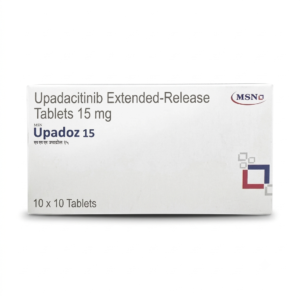
They should not be declared identical only from the brand names. Compare the approved labels for active ingredient, strength, release type, manufacturer, excipients and regulatory status. The shown UPATERO-15 ER label states Upadacitinib Extended Release 15 mg.
32. Can I switch brands?
Ask the prescriber or pharmacist. A switch should confirm the same active ingredient, strength, release form and authorised supply.
33. How should I store it?
Keep it in the original pack away from heat, moisture, sunlight, children and pets. Follow the package storage instructions.
34. Is it addictive?
No. It is not considered habit-forming. Return of symptoms after stopping is not the same as addiction.
35. Can I drive after taking it?
Do not drive if infection, dizziness, headache or illness affects alertness or reaction time.
References
- U.S. FDA: JAK inhibitor safety communication on serious heart-related events, cancer, blood clots and death.
- DailyMed: Upadacitinib human prescription labeling and Medication Guide.
- European Medicines Agency: Rinvoq, upadacitinib, EPAR information.
- NCBI Bookshelf: Upadacitinib clinical drug information.
- MedlinePlus: Upadacitinib patient medicine information.
- U.S. FDA: Upadacitinib prescribing information.
Medical-content note: Regulatory indications, warnings, age limits, contraindications and prescribing instructions can change by country and over time. The product pack and the prescribing information approved for the patient’s country should take priority. This content should be medically reviewed before publication or use in a pharmacy catalogue.










There are no reviews yet.