
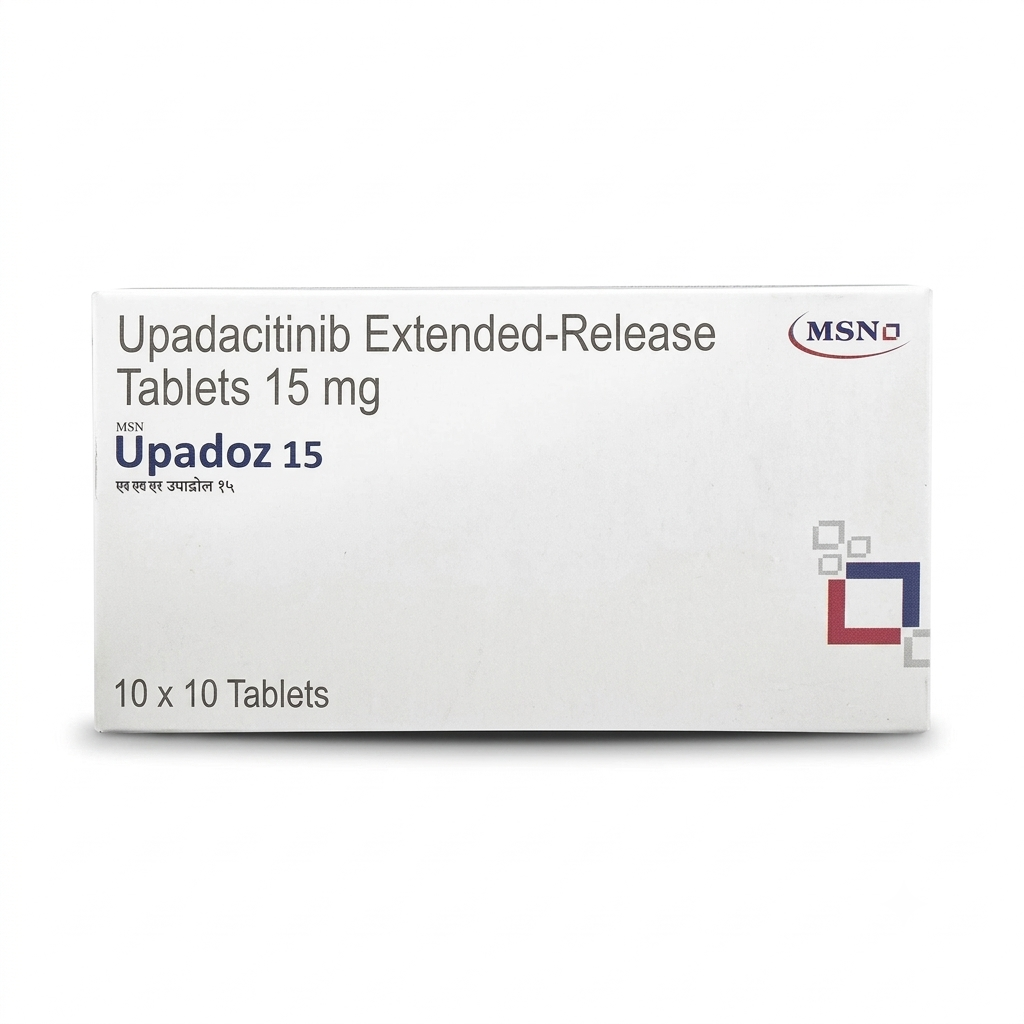
Upadoz 15mg Tablet
Product name: Upadoz 15mg Tablet
Active ingredient: Upadacitinib 15mg
Pack size: 1×10 tablets
Product category: Prescription medicine
Important note: Upadoz 15mg Tablet contains upadacitinib, a prescription immunomodulatory medicine. It should be used only when prescribed by a qualified doctor. This product description is for general education and does not replace a medical consultation, diagnosis, prescription, or follow-up care. The exact indication, dose, duration, warnings, and suitability depend on the patient’s condition, age, medical history, laboratory results, and the approved local product information.
INTRODUCTION
Upadoz 15mg Tablet contains upadacitinib 15mg, a medicine belonging to the Janus kinase, or JAK, inhibitor group. It is designed to reduce excessive activity in specific immune pathways that can contribute to inflammation. Doctors may prescribe upadacitinib for selected inflammatory and immune-mediated conditions when treatment with other medicines is not suitable, has not worked adequately, or requires a different therapeutic approach.
Upadoz 15mg is supplied in a 1×10 tablet pack. The tablet must be taken exactly as directed by the prescribing doctor. Because upadacitinib changes immune-system activity, it is not an ordinary painkiller and should not be started, stopped, shared, or dose-adjusted without medical supervision.
What is Upadoz 15mg Tablet?
Upadoz 15mg Tablet is a branded tablet containing 15mg of upadacitinib. Upadacitinib selectively inhibits JAK signalling involved in the communication of inflammatory signals. By lowering activity in these pathways, the medicine may help control inflammation and symptoms in certain approved conditions. The drug’s effect is condition-specific; a doctor must decide whether it is appropriate for an individual patient.
Who may buy or use it?
Upadoz 15mg is intended for patients who have received a valid prescription for upadacitinib. It may be considered for adults, and in some conditions for other age groups, only when the approved indication and patient-specific prescribing requirements are met. Online availability does not mean that the medicine is suitable for everyone. A prescription, medical history, and appropriate monitoring are essential.
USES OF UPADOZ 15MG TABLET
Doctors may prescribe upadacitinib for selected inflammatory or immune-mediated disorders covered by the applicable Indian prescribing information. Depending on the approved label and the patient’s clinical situation, upadacitinib may be used in conditions such as rheumatoid arthritis, psoriatic arthritis, atopic dermatitis, ulcerative colitis, Crohn’s disease, ankylosing spondylitis, non-radiographic axial spondyloarthritis, or other approved inflammatory conditions. Not every patient with one of these conditions should receive the medicine.
The indication must be confirmed by a doctor. Upadoz 15mg should never be used merely because joint pain, skin symptoms, bowel symptoms, or back pain are present. Similar symptoms can have many causes, including infection, allergy, injury, or another disease requiring a different treatment.
Directions for Use
Take Upadoz 15mg exactly as prescribed. The tablet is generally swallowed whole with water and should not be crushed, split, or chewed unless a doctor or pharmacist specifically confirms that it is safe for the particular product. It can usually be taken with or without food, but follow the instructions on the prescription and product leaflet.
Take the medicine at approximately the same time each day to maintain a consistent routine. Do not take more tablets to compensate for a missed dose. If you forget a dose, follow the missed-dose instructions supplied with your prescription or ask your doctor or pharmacist. Do not stop treatment suddenly without discussing it with the prescriber, even if symptoms improve.
BENEFITS OF UPADOZ 15MG TABLET
Helps control immune-mediated inflammation
Upadacitinib works on JAK-mediated signalling involved in inflammation. When appropriately prescribed, it may help reduce disease activity and inflammation associated with the patient’s diagnosed condition.
May improve condition-related symptoms
By controlling inflammation, treatment may help relieve symptoms such as swelling, stiffness, itching, rash, pain, bowel inflammation, or reduced function, depending on the disease being treated. The type and timing of improvement vary from person to person.
Convenient once-daily strength when prescribed
The 15mg strength can be part of a doctor’s once-daily treatment plan for selected patients. The correct strength is individualised; a higher or lower strength is not automatically better.
Known active ingredient
The medicine contains upadacitinib 15mg as its active ingredient. The pack contains 10 tablets, which can help patients and pharmacies identify the supplied quantity clearly.
Storage
Store Upadoz 15mg Tablet in the original packaging, away from direct sunlight, excessive heat, and moisture. Keep it at the temperature stated on the product packaging or leaflet. Do not store it in a damp bathroom or near a sink. Keep the medicine out of the reach and sight of children and pets.
Do not use tablets that are damaged, discoloured, wet, or past their expiry date. Do not transfer tablets into an unlabelled container. Ask a pharmacist about safe disposal of unused or expired tablets; do not give leftover medicine to another person.
Medicinal Benefits
Upadacitinib is a targeted synthetic disease-modifying antirheumatic and immunomodulatory medicine. It inhibits JAK-related intracellular signalling. JAK enzymes help transmit messages from several cytokines, which are signalling proteins involved in immune responses. By reducing signalling from selected pathways, upadacitinib may lower inflammation and help control disease activity.
This mechanism does not mean that the medicine cures every inflammatory disease or permanently removes the underlying cause. It is a long-term control treatment for selected patients, and ongoing medical review is required. Doctors may evaluate symptoms, physical findings, blood tests, disease activity, infection risk, and treatment response.
Drug Warnings
Upadacitinib can reduce immune activity and may increase the risk of serious infections. Tell the doctor before starting treatment if you have an active infection, repeated infections, tuberculosis exposure, hepatitis, HIV, fever, persistent cough, unexplained weight loss, night sweats, or any other concerning symptom.
Patients with a history of cancer, blood clots, heart attack, stroke, major cardiovascular disease, chronic lung disease, liver disease, kidney disease, diverticulitis, bowel perforation, or blood disorders may require special assessment. Inform the doctor about smoking, high blood pressure, diabetes, high cholesterol, obesity, and previous clotting problems.
Doctors may order tests before and during treatment, including screening for tuberculosis and viral hepatitis, complete blood counts, liver tests, lipid tests, and other tests appropriate to the condition. Do not ignore scheduled monitoring.
Avoid live vaccines while taking upadacitinib unless the treating doctor specifically gives a different instruction. Ask about vaccination before treatment begins. Contact the doctor promptly for fever, breathlessness, chest pain, severe abdominal pain, painful skin lesions, persistent cough, sudden weakness, speech difficulty, one-sided swelling, or unexplained bruising.
Drug Interactions
Tell the doctor and pharmacist about every medicine, supplement, and herbal product you use. This includes medicines taken occasionally, injections, over-the-counter painkillers, antibiotics, antifungals, seizure medicines, cholesterol medicines, hormonal medicines, and products purchased online.
Upadacitinib may interact with medicines that strongly affect CYP3A4 enzymes. Examples can include certain antifungals, antibiotics, HIV medicines, and seizure medicines. Some combinations may increase upadacitinib exposure and side effects, while others may reduce its effect. Do not start or stop these medicines without professional advice.
Using upadacitinib with other strong immunosuppressive medicines, biological therapies, or other JAK inhibitors may increase the risk of infection and other serious adverse effects. The combination should be used only when specifically directed by a specialist.
Drug Interactions Checker List: Safety Advice
Before ordering or taking Upadoz 15mg, ask a doctor or pharmacist to check the complete medicine list. Pay particular attention to:
– Other JAK inhibitors or medicines that suppress the immune system.
– Biological medicines used for arthritis, inflammatory bowel disease, or skin disease.
– Strong CYP3A4 inhibitors such as some antifungal or antibiotic medicines.
– Strong CYP3A4 inducers such as certain medicines used for seizures or tuberculosis.
– Medicines affecting blood clotting or platelet function.
– Long-term corticosteroids or repeated steroid courses.
– Vaccines, especially live vaccines.
– Herbal products and supplements whose ingredients may not be fully declared.
Do not rely only on an online interaction checker. A checker may not know your diagnosis, test results, previous infections, pregnancy status, or the exact strength and formulation. A clinician or pharmacist should make the final decision.
SIDE EFFECTS OF UPADOZ 15MG TABLET
Side effects vary by condition, dose, duration, age, and other medicines. Some effects may be mild, while others require urgent medical attention. Report persistent or troublesome symptoms to the doctor.
Common side effects of Upadoz 15mg Tablet
– Upper respiratory tract infection symptoms, such as a blocked or runny nose.
– Sore throat or cough.
– Headache.
– Nausea.
– Acne or skin changes.
– Increased blood cholesterol on laboratory testing.
– Increased liver enzymes on laboratory testing.
– Fever or tiredness.
– Mild stomach discomfort.
– Cold-sore or herpes-related symptoms in susceptible patients.
Severe side effects of Upadoz 15mg Tablet
– Serious infection, including tuberculosis or a serious bacterial, fungal, or viral infection.
– Blood clot in the leg or lung, with leg swelling, sudden chest pain, or sudden breathlessness.
– Heart attack or stroke symptoms.
– Severe allergic reaction, facial swelling, breathing difficulty, or widespread rash.
– Severe abdominal pain, fever, or a change in bowel habits suggesting bowel complications.
– Severe liver injury or yellowing of the skin or eyes.
– Severe or persistent reduction in blood-cell counts.
– New or worsening cancer-related symptoms requiring medical assessment.
When product not to use?
– Do not use it if you have an allergy to upadacitinib or any ingredient in the tablet.
– Do not start it during a serious active infection unless the treating specialist gives a clear plan.
– Do not use it with another JAK inhibitor or biological immunosuppressant unless specifically prescribed.
– Do not use it without a prescription and appropriate baseline evaluation.
– Do not use expired, damaged, or unlabelled tablets.
– Do not share it with another person, even if they have similar symptoms.
– Do not use it during pregnancy unless the doctor decides that the expected benefit outweighs the potential risk.
– Do not use it after a missed dose by taking two tablets together unless the prescriber instructs you to do so.
HOW TO USE
Use Upadoz 15mg only according to the prescription label. Check the tablet strength before every dose. Swallow the tablet whole with water. Maintain the same daily routine and keep follow-up appointments. If you have difficulty swallowing, ask the pharmacist about the specific formulation rather than altering the tablet yourself.
Do not stop treatment because symptoms improve without discussing it with your doctor. Do not continue treatment through a serious infection unless the prescriber has reviewed the situation. If you need surgery, dental treatment, vaccination, or emergency care, tell the healthcare professional that you take upadacitinib.
HOW PRODUCT WORKS
Upadoz 15mg works through its active ingredient, upadacitinib. JAK enzymes help transmit signals from cytokines to immune cells. In some inflammatory diseases, these signals may be overactive and contribute to swelling, pain, itching, stiffness, skin inflammation, or intestinal inflammation. Upadacitinib inhibits selected JAK pathways, reducing the transmission of some inflammatory messages.
The medicine does not act as an instant painkiller. Clinical improvement may take time, and the doctor decides how long to continue it. Because the same immune pathways also help protect the body from infection, reducing them can create important safety risks. This is why screening, laboratory monitoring, infection precautions, and regular review are part of treatment.
Dosage
– Take the dose prescribed by your doctor; do not copy another patient’s dose.
– The 15mg strength is used only when it matches the approved indication and the prescriber’s assessment.
– Take it at the same time each day when possible.
– Swallow the tablet whole with water.
– If a dose is missed, follow the prescription leaflet or ask a pharmacist.
– Do not double the next dose unless specifically instructed.
– Do not change the dose for kidney or liver problems without medical advice.
– Do not stop treatment suddenly without speaking to the prescriber.
– If too many tablets are taken, seek urgent medical advice and keep the pack available.
General warnings
– Upadacitinib may increase susceptibility to infections. Avoid close contact with people who have serious contagious infections and report concerning symptoms early.
– Tuberculosis and hepatitis screening may be needed before treatment. A previous infection can become active again when immune activity is reduced.
– The medicine may affect blood counts, liver tests, and cholesterol. Attend all recommended laboratory appointments so the doctor can adjust or pause treatment safely.
– Serious cardiovascular events and blood clots have been reported with JAK inhibitors. Risk may be higher in people who smoke or have cardiovascular risk factors. Tell the doctor about chest pain, sudden breathlessness, leg swelling, or neurological symptoms immediately.
– Discuss cancer history and routine screening with the doctor. Do not skip age-appropriate screening recommended by your healthcare team.
– Tell the doctor if you have diverticulitis, bowel disease, or unexplained abdominal pain. Severe abdominal symptoms require urgent assessment.
– Avoid live vaccines unless specifically approved by the treating doctor. Ask about vaccination before starting therapy.
– Tell every doctor, dentist, and pharmacist that you are taking upadacitinib, especially before surgery or emergency treatment.
– Do not self-medicate with antibiotics, steroids, antifungals, or herbal immune products.
SAFETY ADVICE
🍷 Alcohol
There is no universally safe alcohol amount for every person taking upadacitinib. Alcohol may worsen liver stress and may be unsuitable for people with liver disease, high triglycerides, infection, or medicines that affect the liver. Ask your doctor whether alcohol should be avoided completely.
🤰 Pregnancy
Tell your doctor if you are pregnant, planning pregnancy, or could become pregnant. Upadacitinib is generally avoided during pregnancy unless a specialist decides it is necessary. Do not stop prescribed treatment without medical advice. Discuss reliable contraception and the required waiting period after treatment with your doctor.
🤱 Breastfeeding
Do not breastfeed while taking upadacitinib unless your specialist provides clear, product-specific advice. Discuss alternatives and the appropriate time to resume breastfeeding with your doctor.
🚗 Driving
Upadacitinib is not usually expected to directly impair driving, but infection, fever, dizziness, weakness, or an allergic reaction can make driving unsafe. Do not drive if you feel unwell or cannot concentrate properly.
🧪 Kidney
Tell the doctor about kidney disease, dialysis, dehydration, or abnormal kidney tests. The medicine may need additional assessment, and some related medicines may require dose changes. Do not change the Upadoz 15mg dose yourself.
🫀 Liver
Tell the doctor about hepatitis, fatty liver, cirrhosis, abnormal liver tests, or regular alcohol use. Liver tests may be required before and during treatment. Report yellow eyes, dark urine, pale stools, severe nausea, or unusual itching.
👶 CHILDREN
Keep the medicine away from children. Use in children and adolescents depends on the approved indication, age, weight, formulation, and specialist prescription. Do not give an adult’s tablet to a child.
Product Habit Forming
Upadoz 15mg Tablet is not considered addictive and is not known to cause a habit-forming high. However, it is a powerful prescription medicine that must be taken regularly and monitored. Do not continue, stop, or share it based on habit or advice from an unqualified source.
expert advice
– 🩺 Ask for a complete pre-treatment review: Tell the doctor about infections, tuberculosis exposure, hepatitis, cancer, blood clots, heart disease, stroke, smoking, and previous medicine reactions. This information helps determine whether upadacitinib is appropriate.
– 🧪 Complete the recommended tests: Baseline and follow-up blood tests are not optional paperwork. They help identify low blood counts, liver changes, cholesterol changes, or other problems before they become serious.
– 🛡️ Protect against preventable infections: Ask whether vaccinations should be updated before treatment. Do not receive a live vaccine without specialist advice.
– 📦 Check the pack: Confirm the name, strength, expiry date, and tablet condition. Store the 1×10 pack safely and keep the prescription information with it.
– 📞 Report red flags early: Fever, persistent cough, painful skin lesions, severe stomach pain, sudden breathlessness, chest pain, one-sided weakness, or leg swelling needs prompt medical evaluation.
– 💊 Review every medicine: Tell the pharmacist about over-the-counter products, supplements, antibiotics, antifungals, seizure medicines, and other immune treatments before the first dose.
– 🧑⚕️ Do not judge success too quickly: Improvement can take time and differs by disease. Continue follow-up instead of increasing the dose or adding another medicine independently.
– 🧾 Keep an updated medicine list: Carry the list during travel, emergency visits, surgery, and dental care. Include the active ingredient, upadacitinib.
FOOD AND DRINK
– Upadoz 15mg may generally be taken with or without food, unless the prescription or product leaflet says otherwise.
– Take the tablet with water and maintain good hydration unless fluid restriction has been prescribed.
– Avoid grapefruit or grapefruit juice unless your doctor or pharmacist confirms that it is acceptable with your complete medicine list.
– Limit or avoid alcohol if you have liver problems, abnormal liver tests, high triglycerides, or medicines that affect the liver.
– Do not use herbal immune boosters or supplements without checking their ingredients with a pharmacist.
– Do not use food or drink to conceal a crushed tablet unless a healthcare professional approves the method for this formulation.
– A balanced diet does not remove the need for infection precautions or blood-test monitoring.
FAQs ABOUT UPADOZ 15MG
1. What is Upadoz 15mg Tablet?
It is a prescription tablet containing upadacitinib 15mg, a JAK inhibitor used for selected inflammatory and immune-mediated conditions.
2. What is the active ingredient in Upadoz 15mg?
The active ingredient is upadacitinib 15mg.
3. What is the pack size?
The stated pack contains 1×10 tablets.
4. Is Upadoz 15mg a painkiller?
No. It is an immunomodulatory prescription medicine and is not an ordinary painkiller.
5. What is Upadacitinib used for?
It is used for selected approved inflammatory conditions. The exact use must be confirmed by a doctor.
6. Can I take Upadoz 15mg without a prescription?
No. It requires medical assessment, a prescription, and monitoring.
7. How should I take Upadoz 15mg?
Take it exactly as prescribed, generally swallowing the tablet whole with water.
8. Can I take it with food?
It may generally be taken with or without food, but follow the prescription and local product leaflet.
9. Can I crush or chew the tablet?
Do not crush, split, or chew it unless a doctor or pharmacist confirms that it is suitable for the exact formulation.
10. What if I miss a dose?
Follow the missed-dose instructions from your doctor or pharmacist. Do not double the next dose without advice.
11. Can I stop Upadoz 15mg when I feel better?
No. Discuss stopping or changing treatment with the prescriber.
12. Does Upadoz 15mg cure arthritis permanently?
It may control disease activity in selected patients, but it should not be described as a permanent cure.
13. Does it lower immunity?
It changes specific immune signalling and can increase infection risk. Medical monitoring is important.
14. Can I take it during an infection?
Tell the doctor about any infection. The prescriber will decide whether treatment should continue, pause, or change.
15. Does it require tuberculosis testing?
Tuberculosis screening may be required before and during treatment, depending on risk and local medical practice.
16. Can I take antibiotics with Upadoz 15mg?
Some antibiotics may interact with it. Ask a doctor or pharmacist before starting any antibiotic.
17. Can I take antifungal medicines with it?
Some antifungals can significantly affect upadacitinib levels. Never combine them without medical advice.
18. Can I take another JAK inhibitor with it?
Do not combine JAK inhibitors unless a specialist specifically prescribes the combination, which is generally avoided.
19. Is Upadoz 15mg safe during pregnancy?
Pregnancy requires specialist advice. Tell the doctor before starting, continuing, or stopping treatment.
20. Can I breastfeed while taking it?
Discuss breastfeeding with the specialist. Do not assume it is safe without product-specific medical advice.
21. Can I drink alcohol while taking it?
Ask your doctor, especially if you have liver disease, abnormal liver tests, or other medicines that affect the liver.
22. Can Upadoz 15mg affect the liver?
It may affect liver tests in some patients, so monitoring may be recommended.
23. Can it affect cholesterol?
Changes in cholesterol can occur and may be detected through blood testing.
24. What are common side effects?
Cold-like symptoms, headache, nausea, acne, fever, and laboratory changes may occur. Ask the doctor about persistent symptoms.
25. What are emergency symptoms?
Severe breathlessness, chest pain, leg swelling, sudden weakness, serious allergic symptoms, or severe abdominal pain require urgent medical care.
26. Is it addictive?
It is not considered addictive, but it must be used carefully as a monitored prescription medicine.
27. Can children take Upadoz 15mg?
Only when a qualified specialist prescribes an approved regimen for the child’s condition, age, and formulation.
28. Can I drive after taking it?
Do not drive if you feel dizzy, weak, feverish, unwell, or unable to concentrate.
29. What tests may be needed?
The doctor may recommend infection screening, blood counts, liver tests, cholesterol tests, and other disease-specific monitoring.
30. How should I store the tablets?
Keep them in the original pack, away from heat, sunlight, moisture, children, and pets.
31. Can I share this medicine?
No. It is prescribed for one patient and may be dangerous for another person.
32. What should I tell a surgeon or dentist?
Tell them that you take upadacitinib before surgery, dental treatment, or emergency care.
33. Can vaccination be taken during treatment?
Ask the doctor about every vaccine. Live vaccines usually require special caution.
34. Is 15mg suitable for every patient?
No. The strength is selected according to the diagnosis, age, risk factors, other medicines, and response.
35. Where can I get reliable advice about Upadoz 15mg?
Use the prescribing doctor and a registered pharmacist as the primary sources for personal advice. Keep the product leaflet available.
References
1. U.S. National Library of Medicine, MedlinePlus: Upadacitinib drug information – https://medlineplus.gov/druginfo/meds/a619051.html
2. European Medicines Agency, Rinvoq EPAR and product information – https://www.ema.europa.eu/en/medicines/human/EPAR/rinvoq
3. DailyMed, official U.S. National Library of Medicine medicine label search/result for upadacitinib – https://dailymed.nlm.nih.gov/dailymed/search.cfm?query=upadacitinib
4. U.S. Food and Drug Administration, JAK inhibitor safety communication – https://www.fda.gov/drugs/postmarket-drug-safety-information-patients-and-providers/jak-inhibitors-rheumatoid-arthritis
5. NHS medicine information and treatment guidance portal – https://www.nhs.uk/conditions/
6. U.S. Centers for Disease Control and Prevention, infection and shingles clinical information – https://www.cdc.gov/shingles/hcp/clinical-overview/index.html
Seller and patient-safety notice: Confirm the Indian approved label, manufacturer information, prescription status, and final package insert before publishing this page. Do not make claims that Upadoz 15mg cures a disease, works for every patient, has no side effects, or is safe for self-medication. The product page should display the requirement for a valid prescription and encourage patients to consult a qualified doctor.






There are no reviews yet.