

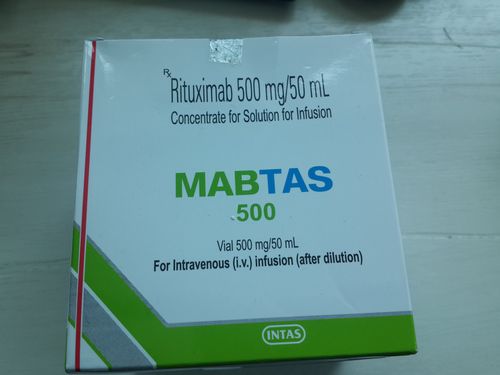

Mabtas 500 Infusion (Rituximab): Complete Product Information
Product Overview
Mabtas 500 Infusion is a prescription-based, targeted biological therapy containing Rituximab (500 mg per 50 ml vial) as its active pharmaceutical ingredient. It belongs to the class of monoclonal antibodies and is used primarily in the management of specific B-cell cancers and autoimmune disorders .
Mabtas 500 is a biosimilar/comparable biologic to the reference product Rituximab, developed by Intas Pharmaceuticals Ltd . Rituximab works by selectively targeting CD20-positive B-cells—a specific type of white blood cell involved in both certain cancers and autoimmune diseases. By binding to these cells, Mabtas 500 marks them for destruction by the body’s immune system, effectively reducing the number of harmful B-cells in the body .
The medication does not discriminate between healthy and malignant CD20-positive B-cells, but because the targeted cells regenerate over time, the therapeutic effect is manageable through controlled dosing schedules.
Key Specifications
| Specification | Details |
|---|---|
| Brand Name | Mabtas 500 Infusion / Mabtas T 500 |
| Active Ingredient | Rituximab |
| Concentration | 10 mg/ml |
| Strength | 500 mg per 50 ml vial |
| Dosage Form | Solution for Infusion (Concentrate) |
| Pack Size | 1 vial per pack |
| Manufacturer | Intas Pharmaceuticals Ltd, India |
| Manufacturing Location | Plot No. 423/P/A, Sarkhej – Bavla Highway, Village – Moraiya, Taluka – Sanand, District – Ahmedabad-382 213, Gujarat, India |
| Prescription Requirement | Prescription Required (Schedules H & H1 in India) |
| Storage Conditions | 2°C to 8°C (Refrigerated). Do not freeze. Protect from light |
| Therapeutic Class | Antineoplastic Agent, Monoclonal Antibody, Immunosuppressant |
| Route of Administration | Intravenous Infusion (IV drip) only |
| Country of Origin | India |
Clinical Pharmacology (Mechanism of Action)
How Mabtas 500 Works
Mabtas 500 Infusion contains Rituximab, a genetically engineered chimeric murine/human monoclonal antibody . Its mechanism of action is highly specific and occurs through several pathways:
1. Target Recognition (CD20 Antigen)
Rituximab specifically recognizes and binds to the CD20 antigen, a protein found on the surface of B-lymphocytes (B-cells). CD20 is present on both normal and malignant B-cells but is absent on stem cells, plasma cells, and other healthy tissues. Importantly, CD20 is not shed from the cell surface or internalized upon antibody binding, making it an ideal therapeutic target .
2. Mechanisms of B-cell Destruction
Once bound to CD20-positive B-cells, Rituximab triggers the destruction of these cells through three primary immune-mediated mechanisms:
Antibody-Dependent Cellular Cytotoxicity (ADCC): Immune effector cells (such as natural killer cells) recognize the bound antibody and release cytotoxic granules that kill the targeted B-cell.
Complement-Dependent Cytotoxicity (CDC): The complement system—a part of the innate immune system—is activated, leading to the formation of membrane attack complexes that puncture and destroy the B-cell.
Apoptosis (Direct Cell Death): Rituximab binding directly triggers programmed cell death signaling pathways within the B-cell itself.
3. B-cell Depletion and Recovery
Following administration, circulating CD20-positive B-cells are rapidly depleted within days. The depletion typically persists for 6 to 12 months after treatment completion, as new B-cells must regenerate from CD20-negative precursor cells in the bone marrow. This prolonged effect underlies both the efficacy and the immunosuppressive risks of the therapy .
Pharmacokinetics
| Parameter | Details |
|---|---|
| Peak Concentration | Achieved immediately after infusion completion |
| Half-life | Approximately 22 days (range 6 to 52 days) |
| Distribution | Primarily in vascular compartment |
| Metabolism | Proteolytic degradation (not hepatic metabolism) |
| Elimination | Saturable clearance pathways; slower at higher doses |
Primary Uses (Indications)
Mabtas 500 Infusion is indicated for the treatment of several conditions where pathological B-cells play a central role :
Oncology Indications (B-cell Malignancies)
1. Non-Hodgkin Lymphoma (NHL)
Relapsed or Refractory, Low-grade or Follicular NHL: As a single agent for patients who have not responded to or have relapsed after chemotherapy
Previously Untreated Follicular NHL: In combination with chemotherapy (e.g., CVP or CHOP regimens) followed by maintenance therapy
Diffuse Large B-Cell Lymphoma (DLBCL): In combination with CHOP chemotherapy (R-CHOP regimen)
Burkitt Lymphoma: As part of combination chemotherapy protocols
2. Chronic Lymphocytic Leukemia (CLL)
Previously Untreated and Relapsed/Refractory CLL: In combination with chemotherapy agents such as fludarabine and cyclophosphamide (FCR regimen)
As a single agent or in combination for patients with CD20-positive CLL
Autoimmune Indications
3. Rheumatoid Arthritis (RA)
Moderate to Severe Active RA: For adult patients with inadequate response to one or more Tumor Necrosis Factor (TNF) antagonist therapies
Used in combination with methotrexate to reduce signs and symptoms, induce major clinical response, and slow progression of joint damage
4. Granulomatosis with Polyangiitis (GPA) (formerly Wegener’s Granulomatosis)
In combination with glucocorticoids for induction of remission in adult patients with severe, active GPA. This condition causes inflammation of blood vessels in the ears, nose, throat, lungs, and kidneys .
5. Microscopic Polyangiitis (MPA)
In combination with glucocorticoids for induction of remission in adult patients with severe, active MPA, an autoimmune disease affecting small blood vessels .
Other Uses (Off-label)
Pemphigus vulgaris (severe blistering skin disorder)
Idiopathic thrombocytopenic purpura (ITP)
Other autoimmune cytopenias
Post-transplant lymphoproliferative disorder (PTLD)
Administration Guidelines
Important: Healthcare Provider Administration Only
Mabtas 500 Infusion must be administered by a qualified healthcare professional in a clinical setting equipped to manage severe infusion reactions. Do not self-administer.
Pre-medication Requirements
To minimize the risk and severity of infusion-related reactions, patients should receive premedication 30-60 minutes before each infusion :
| Pre-medication | Purpose | Typical Dose |
|---|---|---|
| Antipyretic (e.g., Acetaminophen/Paracetamol) | Reduces fever risk | 500-1000 mg orally |
| Antihistamine (e.g., Diphenhydramine) | Reduces itching, rash, and allergic reactions | 25-50 mg orally or IV |
| Corticosteroid (e.g., Methylprednisolone) | Reduces infusion reaction severity | 100 mg IV (especially for first infusion and RA patients) |
Preparation and Dilution
Inspection: Visually inspect the vial for particulate matter or discoloration. Do not use if solution is discolored or contains particles .
Aseptic Technique: Use strict aseptic technique during preparation.
Dilution: Withdraw the required volume of Mabtas 500 concentrate and dilute into an infusion bag containing sterile, preservative-free 0.9% Sodium Chloride (Normal Saline) to a final concentration of 1 mg/ml to 4 mg/ml.
For 1 mg/ml: Add 500 mg (50 ml) to 500 ml saline bag
For 4 mg/ml: Add 500 mg (50 ml) to 125 ml saline bag
Gentle Mixing: Gently invert the bag to mix; do not shake vigorously (prevents foaming).
Compatibility: Do not mix or dilute with other drugs. Do not administer as an IV push or bolus.
Infusion Administration Protocol
First Infusion (Initial Dose):
Starting Rate: 50 mg/hour (50 ml/hour for 1 mg/ml concentration)
Rate Escalation: Increase by 50 mg/hour increments every 30 minutes, as tolerated
Maximum Rate: 400 mg/hour
Duration: Approximately 4-6 hours for first infusion
Subsequent Infusions:
Starting Rate: 100 mg/hour
Escalation: Increase by 100 mg/hour increments every 30 minutes, as tolerated
Maximum Rate: 400 mg/hour
Duration: Approximately 3-4 hours
Monitoring During Infusion
Vital signs (blood pressure, heart rate, respiratory rate, oxygen saturation) at baseline, every 30 minutes during infusion, and at completion
Observe for signs of infusion reactions (fever, chills, rigors, hypotension, urticaria, angioedema, bronchospasm)
Emergency equipment (oxygen, epinephrine, antihistamines, corticosteroids) must be readily available
Dosage Regimens by Indication
Non-Hodgkin Lymphoma (NHL)
Relapsed or Refractory, Low-grade NHL:
Dose: 375 mg/m² body surface area
Frequency: Once weekly for 4 or 8 doses
Retreatment: 4 weekly doses for patients who responded to initial treatment
Previously Untreated Follicular NHL (Combination Therapy):
Dose: 375 mg/m²
Frequency: Day 1 of each chemotherapy cycle for up to 8 cycles
Maintenance: 375 mg/m² every 8 weeks for up to 12 doses (or until disease progression)
Diffuse Large B-Cell Lymphoma (R-CHOP Regimen):
Dose: 375 mg/m²
Frequency: Day 1 of each 21-day chemotherapy cycle
Cycles: 6 to 8 cycles
Chronic Lymphocytic Leukemia (CLL)
Dose: 375 mg/m² on Day 1 of Cycle 1 (first cycle), then 500 mg/m² on Day 1 of Cycles 2-6
Cycle Length: 28 days
Regimen: In combination with chemotherapy (fludarabine + cyclophosphamide)
Rheumatoid Arthritis (RA)
Course 1: Two 1000 mg IV infusions given 2 weeks apart
Subsequent Courses: Based on clinical response, typically every 24 weeks (6 months) or as needed
Concomitant: Must be given with methotrexate
Pre-medication: Methylprednisolone 100 mg IV prior to each infusion is strongly recommended
Granulomatosis with Polyangiitis (GPA) & Microscopic Polyangiitis (MPA)
Induction Dosing: 375 mg/m² once weekly for 4 weeks
Maintenance: Following induction, two 500 mg infusions given 2 weeks apart, then every 6 months based on response
Concomitant: Given with glucocorticoids
Side Effect Profile
Infusion-Related Reactions (Most Common)
Infusion reactions are the most frequently observed adverse events, occurring in over 50% of patients during the first infusion. These reactions typically diminish with subsequent infusions .
| Severity | Signs and Symptoms | Management |
|---|---|---|
| Mild to Moderate | Fever, chills, rigors, nausea, itching, headache, rash, mild hypotension | Slow or temporarily stop infusion; administer antipyretics and antihistamines |
| Severe | Severe hypotension, bronchospasm, angioedema, hypoxia, pulmonary infiltrates | Stop infusion immediately; administer oxygen, epinephrine, corticosteroids, IV fluids |
Common Side Effects (>10% of patients)
General: Headache, weakness (asthenia), fatigue, fever (pyrexia)
Gastrointestinal: Nausea, abdominal pain, diarrhea, vomiting
Dermatologic: Hair loss (alopecia), itching (pruritus), rash, night sweats
Constitutional: Chills, back pain, joint pain (arthralgia), flushing
Laboratory: Decreased white blood cell count (lymphopenia, neutropenia), decreased red blood cells (anemia), decreased platelets (thrombocytopenia)
Less Common but Significant Side Effects
Infections:
Increased susceptibility to bacterial, viral, and fungal infections
Upper respiratory tract infections, urinary tract infections, sinusitis
Reactivation of Hepatitis B (can be fatal; screening required)
Progressive Multifocal Leukoencephalopathy (PML): Rare but fatal viral infection of the brain; presents with confusion, vision changes, speech difficulty, weakness
Cardiovascular:
Cardiac arrhythmias (including atrial fibrillation)
Chest pain (angina), hypotension, hypertension
Worsening of pre-existing heart conditions
Hematologic:
Severe neutropenia (increased infection risk)
Severe thrombocytopenia (bleeding risk; avoid activities that may cause bruising/injury)
Dermatologic:
Severe skin and mouth reactions: Stevens-Johnson Syndrome (rare), toxic epidermal necrolysis
Painful sores or ulcers on skin, lips, or mouth; blistering; peeling skin
Contraindications
Mabtas 500 Infusion is contraindicated in the following situations:
Hypersensitivity: Known severe allergic reaction (anaphylaxis) to Rituximab, murine proteins, or any component of the formulation .
Active Infections: Patients with severe, active infections .
Hepatitis B Reactivation Risk: Active hepatitis B infection or history of hepatitis B without appropriate monitoring .
Immunosuppressed State: Severe immunocompromised status not related to the underlying condition being treated.
Live Vaccines: Concurrent administration of live viral vaccines (see Drug Interactions) .
Warnings and Special Precautions
1. Hepatitis B Virus (HBV) Reactivation
CRITICAL WARNING: Rituximab can cause fatal reactivation of hepatitis B virus in patients who are chronic carriers (HBsAg positive) or have resolved infection (HBcAb positive) .
Required Actions:
Screen all patients for HBV infection before treatment initiation (HBsAg, HBcAb, HBsAb)
Monitor patients for signs of hepatitis during and for several months after treatment
Consult with a hepatitis specialist for management of patients with positive serology
Discontinue rituximab and initiate antiviral therapy if reactivation occurs
2. Progressive Multifocal Leukoencephalopathy (PML)
CRITICAL WARNING: PML is a rare but often fatal opportunistic viral infection of the brain caused by JC virus .
Symptoms Requiring Immediate Evaluation:
New or worsening confusion or memory loss
Decreased vision or visual changes
Difficulty speaking or slurred speech
Loss of coordination or balance
Weakness on one side of the body
3. Severe Infusion Reactions
Fatal infusion reactions have occurred within 24 hours of the first infusion .
Risk Factors:
First infusion
Pre-existing cardiac or pulmonary conditions
High tumor burden
Management:
Administer in facility with resuscitation equipment
Interrupt infusion for severe reactions
Permanently discontinue for life-threatening reactions
4. Tumor Lysis Syndrome (TLS)
In patients with high numbers of circulating malignant B-cells (high tumor burden), rapid B-cell destruction can cause TLS—a metabolic emergency.
Prevention/Monitoring:
Aggressive IV hydration
Allopurinol or rasburicase
Monitor electrolytes (potassium, uric acid, calcium, phosphorus) and renal function
5. Cardiovascular Events
Cardiac arrest, hypotension, and arrhythmias have been reported .
Precautions:
Monitor blood pressure continuously during infusion
Use with caution in patients with history of angina, arrhythmias, or heart failure
Consider holding antihypertensive medications 12 hours before infusion (to prevent excessive hypotension)
6. Severe Skin Reactions
Discontinue rituximab immediately if severe mucocutaneous reactions occur .
7. Immunizations
Do NOT administer live vaccines (MMR, varicella, zoster, nasal influenza, yellow fever) during or for at least 6-12 months after rituximab treatment .
Inactivated vaccines (injectable influenza, pneumococcal) may be given but may have reduced efficacy.
8. Pregnancy and Contraception
Rituximab can cross the placenta and cause neonatal B-cell depletion .
Effective contraception required during treatment and for 12 months after the last dose for women of childbearing potential .
Men should also use effective contraception during and for 12 months after treatment.
9. Breastfeeding
Rituximab is excreted in human breast milk. Breastfeeding is not recommended during treatment and for 12 months after the last dose .
Drug Interactions
| Interacting Drug/Agent | Effect | Recommendation |
|---|---|---|
| Live Vaccines | Severe infection risk; vaccine virus replication may occur | Contraindicated. Avoid live vaccines during and for 6-12 months after treatment |
| Antihypertensive Medications | Increased risk of severe hypotension during infusion | Consider withholding for 12 hours before infusion |
| Other Immunosuppressants (e.g., methotrexate, cyclosporine, corticosteroids) | Additive immunosuppression; increased infection risk | Monitor closely for signs of infection |
| Anti-cancer Agents (chemotherapy) | No significant pharmacokinetic interactions; additive toxicities | Standard monitoring as per chemotherapy protocol |
| Warfarin | Rituximab may affect INR | Monitor INR more frequently |
| Alcohol | No direct interaction but caution advised due to liver function monitoring needs | Consult physician; avoid excessive alcohol |
Special Population Considerations
| Population | Recommendation |
|---|---|
| Pregnancy | Avoid use. Crosses placenta. Effective contraception required during and for 12 months after last dose. Potential neonatal B-cell depletion . |
| Breastfeeding | Not recommended. Excreted in breast milk. Avoid during treatment and for 12 months after last dose . |
| Pediatrics | Use with extreme caution. Limited safety data. Not routinely recommended for children under 18 except in specific clinical trials . |
| Elderly (≥65 years) | No dose adjustment. Higher frequency of cardiac and pulmonary disease; monitor closely for infusion reactions and infections . |
| Renal Impairment | No dose adjustment necessary. Limited excretion via kidneys . |
| Hepatic Impairment | Limited data. Not recommended in active liver disease or viral hepatitis. Monitor LFTs closely . |
| Heart Disease | Use with caution. Risk of arrhythmias, hypotension, angina. Continuous cardiac monitoring during infusion . |
Storage and Handling
| Requirement | Details |
|---|---|
| Temperature | 2°C to 8°C (Refrigerated) |
| Freezing | Do NOT freeze. Discard if frozen |
| Light Protection | Store in original carton until use |
| Shaking | Do not shake |
| Diluted Solution Stability | Chemically and physically stable for 24 hours at 2-8°C. Room temperature use within 12 hours (including infusion time) . |
| Discard Unused Portion | Vials are single-use only. Discard any unused portion as per biohazard waste guidelines . |
Patient Education and Counseling Points
Before Treatment
Inform your doctor about all medications, supplements, and herbal products you take.
Report any history of hepatitis B, heart disease, lung disease, or bleeding disorders.
Discuss vaccination history (especially live vaccines).
Confirm pregnancy status and agree to use effective contraception.
During Treatment
Expect to receive pre-medications before each infusion.
Remain in the clinical setting for monitoring during and after infusion.
Report any unusual symptoms immediately—especially fever, chills, difficulty breathing, chest tightness, or facial swelling.
After Treatment
Watch for signs of infection: fever >100.4°F (38°C), persistent cough, sore throat, burning with urination.
Watch for signs of heart problems: chest pain, palpitations, shortness of breath.
Watch for neurological symptoms: confusion, vision changes, speech difficulty, weakness.
Do not receive any live vaccines for at least 6 months after completing therapy.
Continue effective contraception for 12 months after your last dose.
Attend all scheduled follow-up appointments for blood tests.
Frequently Asked Questions (FAQ)
Q: What is Mabtas 500 Infusion used for?
A: Mabtas 500 is used to treat certain blood cancers including Non-Hodgkin lymphoma and Chronic Lymphocytic Leukemia, as well as autoimmune conditions such as Rheumatoid Arthritis, Granulomatosis with Polyangiitis, and Microscopic Polyangiitis .
Q: How is Mabtas 500 administered?
A: It is given as an intravenous (IV) infusion (drip) by a doctor or nurse in a hospital or clinical setting. The first infusion typically takes 4-6 hours, while subsequent infusions may be shorter .
Q: Why do doctors give Rituximab for both cancer and autoimmune diseases?
A: Rituximab targets and deletes CD20-positive B-cells, which play a harmful role in both certain cancers (where B-cells multiply uncontrollably) and autoimmune diseases (where B-cells attack the body’s own tissues). This makes it effective across multiple conditions involving abnormal B-cell activity .
Q: What are the most common side effects?
A: The most common side effects include fever, chills, headache, nausea, weakness, itching, rash, and hair loss. These are most frequent during the first infusion and usually decrease with subsequent doses .
Q: Can Mabtas 500 cause serious reactions during infusion?
A: Yes. Some patients experience severe infusion reactions including difficulty breathing, sudden blood pressure drop, swelling of the face/tongue, or chest pain. This is why the first dose is given slowly under close medical supervision with emergency equipment available .
Q: Does Mabtas 500 increase my risk of infections?
A: Yes. Rituximab suppresses the immune system by depleting B-cells, which are important for fighting infections. You may be more susceptible to bacterial, viral, and fungal infections. Report any fever, persistent cough, or other signs of infection to your doctor immediately .
Q: Can Mabtas 500 reactivate hepatitis B?
A: Yes, this is a serious and potentially fatal risk. All patients are screened for hepatitis B before starting treatment. If you have a history of hepatitis B, your doctor will monitor you closely during and after treatment .
Q: Is it safe to receive vaccines while on Mabtas 500?
A: Live vaccines (MMR, chickenpox, shingles, nasal flu vaccine) are strictly contraindicated during and for 6-12 months after treatment. Inactivated vaccines may be given but may be less effective. Always consult your doctor before receiving any vaccine .
Q: How long does Mabtas 500 stay in my system?
A: Rituximab has a long half-life of approximately 22 days. B-cell depletion can persist for 6 to 12 months after the last dose. This is why contraception is required for 12 months after treatment .
Q: Can I drive after receiving Mabtas 500?
A: It is not known whether Mabtas 500 affects driving ability. However, infusion reactions such as dizziness or weakness may occur. Do not drive if you experience any symptoms that affect your ability to concentrate and react .
Summary
Mabtas 500 Infusion (Rituximab 500mg/50ml) is a targeted monoclonal antibody therapy manufactured by Intas Pharmaceuticals Ltd. It is indicated for the treatment of CD20-positive B-cell malignancies (Non-Hodgkin lymphoma, Chronic Lymphocytic Leukemia) and autoimmune conditions (Rheumatoid Arthritis, Granulomatosis with Polyangiitis, Microscopic Polyangiitis) .
The medication works by binding to CD20 antigens on B-cells, leading to their destruction through ADCC, CDC, and apoptosis. Key clinical considerations include:
Administration: IV infusion only, by healthcare professionals in monitored settings
Storage: Refrigerated at 2-8°C; protect from light
Monitoring: Hepatitis B screening, blood counts, cardiac monitoring, infection surveillance
Serious Risks: HBV reactivation, PML, severe infusion reactions, cardiac events
Contraindications: Live vaccines, active infections, pregnancy (use effective contraception for 12 months post-treatment)
With proper patient selection, pre-medication, and monitoring, Mabtas 500 provides an effective therapeutic option for patients with CD20-positive malignancies and specific autoimmune disorders.
Disclaimer: This information is for educational and medical reference purposes only. It does not constitute medical advice. Always consult a registered medical practitioner, oncologist, or rheumatologist before starting, stopping, or altering any treatment regimen. Individual dosing and monitoring should be determined by a qualified healthcare provider based on patient-specific factors.




There are no reviews yet.